Piko
Piko Promptu incele ↗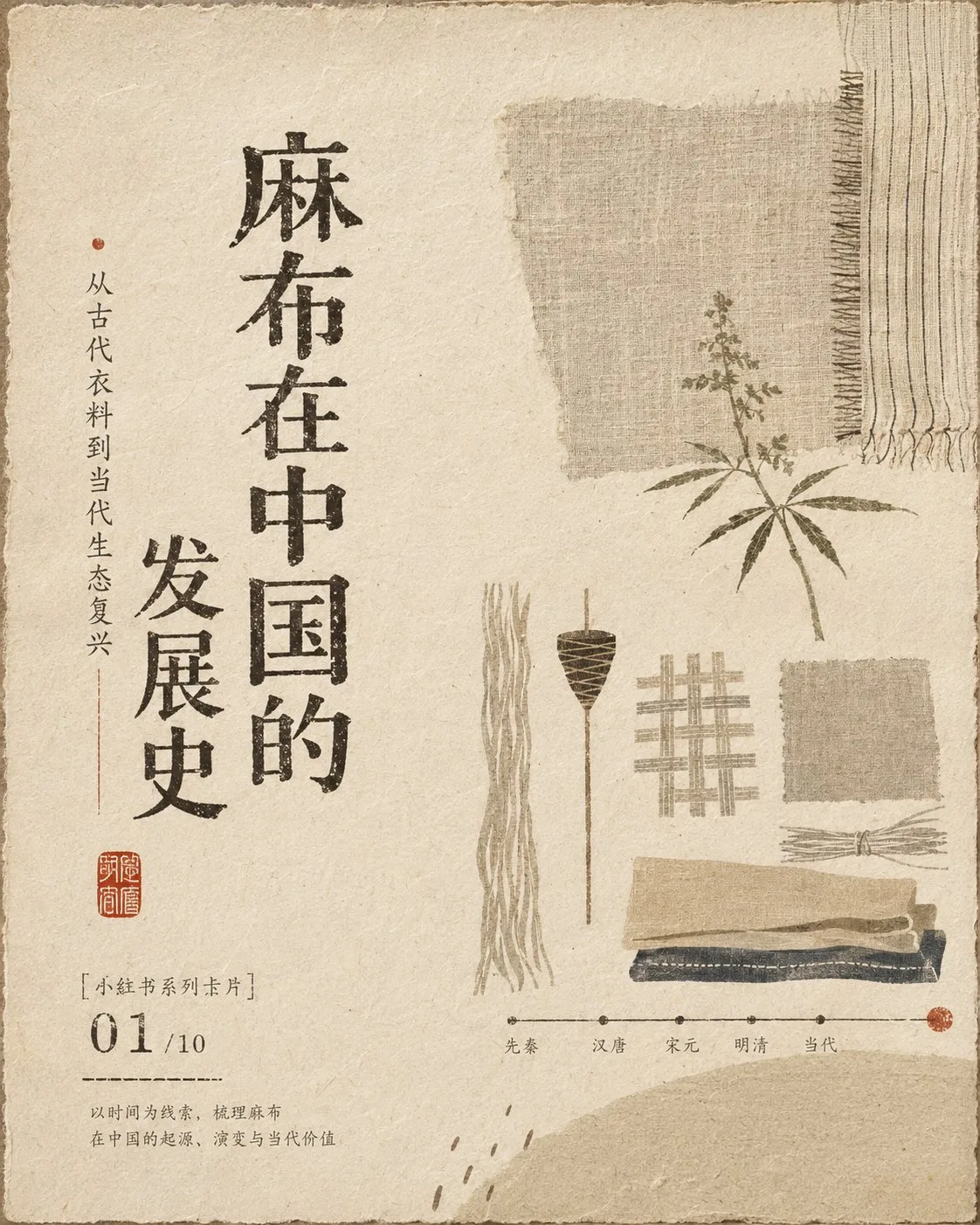
ChatGPT
FotoğrafChatGPT
Wabi sabi folk art linen history china
Üretici @xiaoxiaodong01
Prompt
With wabi-sabi aesthetics, Ma aesthetics, folk art theory, mono no aware consciousness, Eastern Zen white space, ancient book layout and modernist visual order as the core, integrated with Yanagi Soetsu's simple folk art view, Serizawa Keisuke's stencil dyeing structure, Taniuchi Rokuro's naive narrative, Tanaka Ikko's geometric refinement, Jin Nong's archaic writing, and Wu Changshuo's seal carving charm to assist the design; the overall adoption of handmade fabrics, old paper fibers and natural media textures like plant dyes, preserving wrinkles, raw edges, color bleeding, wear, slight overprinting misalignment and uneven ink absorption, but controlling the density of dirt to make the picture more restrained, exquisite, and breathable. The color matching follows principles such as low-saturation tone, analogous color progression, value layering, hidden cold and warm contrast, area proportion control, material composite colors, a small amount of high-brightness visual brightening, and small-area anchoring of dark colors, carried by a large area of soft base tones, establishing layers with medium-brightness blocks, stabilizing the center of gravity with a small amount of deep values, and forming a gentle focus with local light and brightness, presenting the color relationship of old objects warmed by time. The composition adopts asymmetrical balance, Eastern white space, visual triangle, diagonal movement, rhythm of density, Gestalt proximity and closure laws, one-sided text anchoring, edge tension, and scale contrast; the main symbols are distributed in a loose but orderly rhythm, avoiding standard centering and average arrangement, allowing the white space to become the main visual content, forming a quiet, slow, and light reading path. The font system adopts vertical arrangement of ancient books, block-printed characters, clerical script handwriting, seal marks and modern information hierarchy mixed arrangement; the glyphs are de-mechanized, the center of gravity is slightly low, the horizontal and vertical proportions are not completely uniform, the stroke ends retain woodcut knife marks and dry brush flying white, and local parts are slightly elongated, flattened, damaged, or ink-bleeding; the main text forms a spiritual axis with a vertical rhythm, the auxiliary text uses a small-size annotation-style layout, the character spacing is loose, the line spacing is restrained, and seal-style graphics serve as visual signatures; through screen printing, woodblock rubbing, stencil dyeing, dry brushing, rubbing, overprinting and slight misregistration to create a sense of true handmade quality. Illustrations use Serizawa Keisuke's flat stencil generalization, Taniuchi Rokuro's childlike naivety, Samiro Yunoki's folk fabric rhythm, Tanaka Ikko's geometric induction, rough edges of woodblock prints and child-like imprecise proportions; the content is only suggested by abstract life symbols, simple blocks, silhouette outlines and a small amount of hand-drawn strokes, not depicting specific categories, not pursuing realistic perspective, preserving contingency, a sense of pause and handmade temperature. Overall atmosphere: warm, quiet, nostalgic, rustic, soft, restrained, intimate, healing, implicit, relaxed, everyday poetry, old time sense, handmade temperature, slightly sweet, low-voice narrative, Eastern life ritual sense, high-end but not over-exquisite.

——————
Subject: The development history of linen in China
Usage: Serialized pictures Xiaohongshu cards.
Multi-picture logic similar to PPT
A total of 10 pictures
Metni kopyala, kendi detaylarını ekle ve kullandığın görsel modelinde dene.