Piko
Piko Promptu incele ↗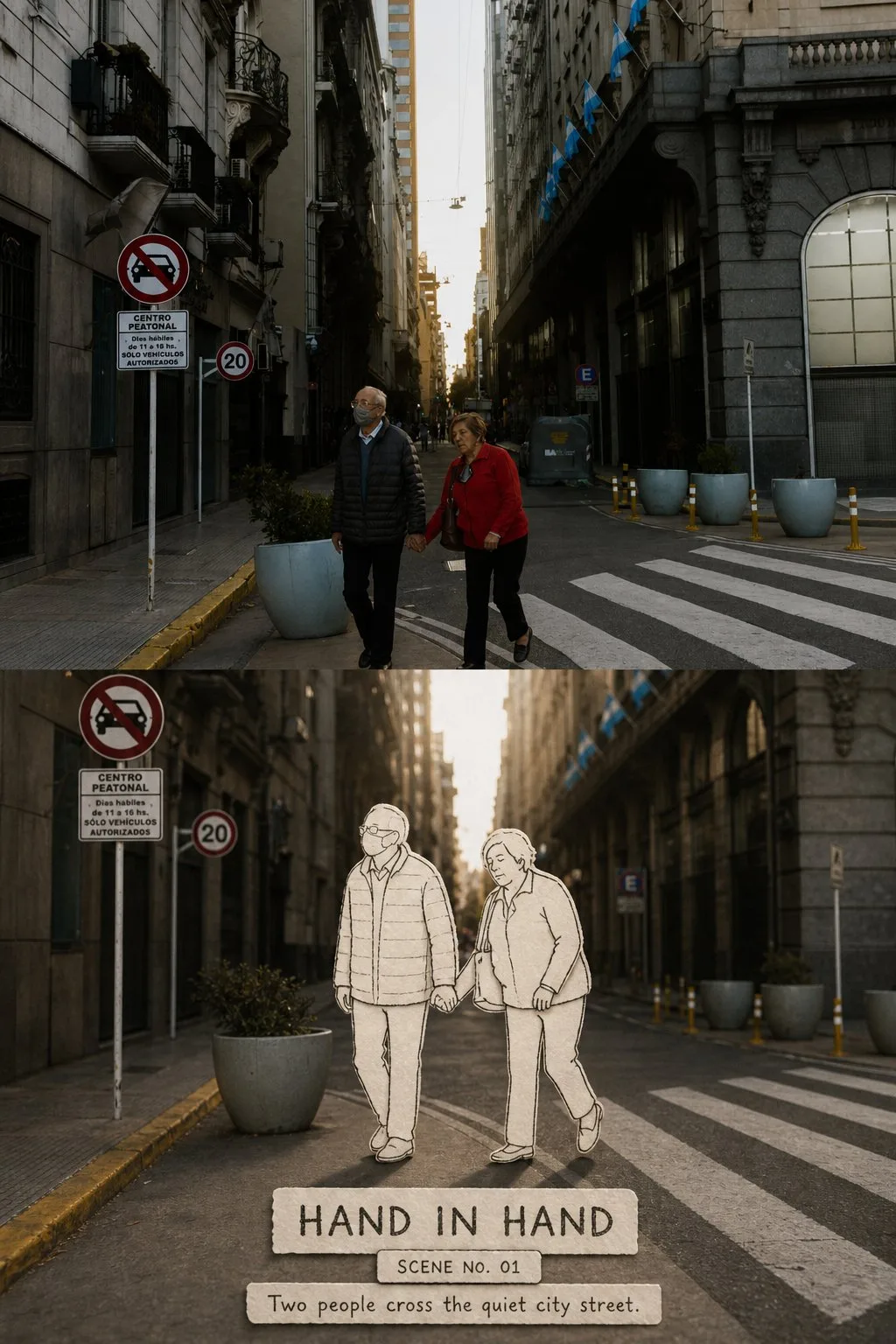
ChatGPT
TasarımChatGPT
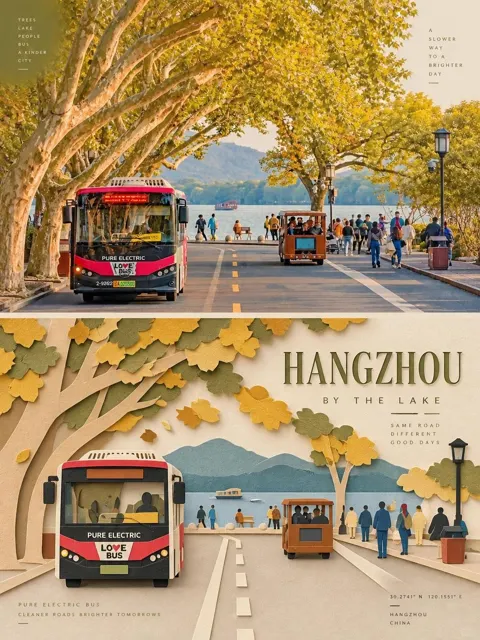
Travel photography paper cutout sketch collage poster
Üretici @Hamburgerai
Prompt
Please turn every travel photo I upload into an independent high-end transformed poster, no multi-photo stitching, output each photo individually.

The overall structure uses a 3:4 vertical top-and-bottom comparison. The top part accounts for about 48%–50% of the screen, completely retaining the original photo; the bottom part accounts for about 50%–52%, reconstructing the same location, the same person, and the same moment. Use a clear, straight horizontal boundary between the top and bottom, without blending, torn paper, multi-layer collage, or middle decorative bands.

The top part faithfully preserves the identity, number, facial features, posture, direction of travel, gestures, clothing, personal belongings, spacing between people, front-to-back occlusion, architectural structure, road perspective, real materials, natural lighting, and location atmosphere of the original photo. Only perform slight travel magazine, art publication, or exhibition photography color grading, and add very thin film grain. Do not change people, replace backgrounds, move buildings, add or delete pedestrians, or turn photos into illustrations.

The bottom part reconstructs the same space, but allows for a more editorial secondary composition based on human relationships. Choose a real photography environment sufficient to prove the location, moderately tighten the cropping, reduce background contrast, or delete irrelevant peripheral figures, making the 1–4 most important figures in the photo a clear narrative center. Keep about 20%–32% of continuous low-information negative space in the sky, walls, streets, water, or ground, allowing the image to breathe and accommodate text.

The architecture, streets, walls, trees, vehicles, sky, water, and lighting in the bottom part continue to maintain real photography textures. Do not draw the entire scene together as a line drawing. Only transform the people who actually exist in the photo and play a major narrative role into "warm white paper + black hesitant line drawing" physical collage sketch characters.

Strictly maintain the real number, position, size, posture, direction of movement, distance from each other, hand contact, front-to-back occlusion, and interactive relationship of the characters. Each character consists of the following parts:

- Opaque warm white or natural white paper fill, completely covering the original photographic content of the character;
- Visible but restrained natural paper grain and slight fibers;
- Clean but slightly manual-error die-cut paper edges;
- Loose, hesitant, black or ink black outlines with slightly varying thickness;
- A very small amount of internal sketch lines for hair, collars, arms, palms, legs, shoes, backpacks, or cameras;
- Very shallow, correctly directed foot contact shadows and paper layer shadows.

The characters must stand in the scene like real thin paper characters, with foot-to-ground contact, occlusion between characters, perspective scaling, and scene light direction all being believable. Do not just overlay white line drawings on transparent photographic people, nor make them into thick foam stickers, cartoon characters, emojis, comic characters, or AR interfaces.

Very small characters in the distance can be actively moved out of the frame according to the cropping of the bottom part; if they remain clearly identifiable, they should be processed as simple white paper silhouettes in their real numbers, and must not be copied, added, or unified into the same pose. Bags, hats, cameras, umbrellas, or bicycles related to the character's movement can be turned into paper along with the character.

By default, add three layers of accurate, readable English text:

1. Extract a title of 1–3 English words based on the character's movement or scene relationship in the photo;
2. An observation number similar to "SCENE NO. 01";
3. A short sentence of 5–10 English words describing the actual walking, waiting, meeting, hugging, or watching happening in the photo.

The main title must be clearly recognizable at normal chat preview sizes, accounting for about 25%–38% of the width of the bottom area. The text uses loose black ink capital letters, manual lead type, or sketchbook-style condensed font, which can be printed on a warm white handmade paper tag or arranged along low-information walls or floors. Ink marks are allowed to have slight breaks and paper teeth, but cannot be shrunk into decorative gray lines, nor look like smooth digital typography overlaid in post-production.

Do not fabricate character relationships, locations, dates, brands, citations, or author information. Text must not cover character faces, hand interactions, or foot contact positions.

The overall effect has the wonderful feeling of real travel photography and paper character sketches existing simultaneously: the environment still belongs to reality, while the characters seem to be cut out from memories, diaries, or sketchbooks and then gently placed back into the journey.

Avoid: full-poster redraw, illustrated buildings, illustrated street, all-white background replacing the scene, transparent line overlay on photographic people, cartoon people, colored comic characters, kawaii stickers, speech bubbles, AR interface, thick foam stickers, altered person count, invented pedestrians, duplicated figures, changed poses, separated hands, floating figures, missing contact shadows, tiny source-photo comparison, fake text, author name, signature, social handle, logo, watermark.

Most important rule: the top must completely retain the real original photo; the bottom remains a real photographic space, only transforming the characters actually existing in the photo into physical collage characters composed of warm white paper and hesitant black ink lines.
Metni kopyala, kendi detaylarını ekle ve kullandığın görsel modelinde dene.