Piko
Piko Promptu incele ↗
ChatGPT
TasarımChatGPT
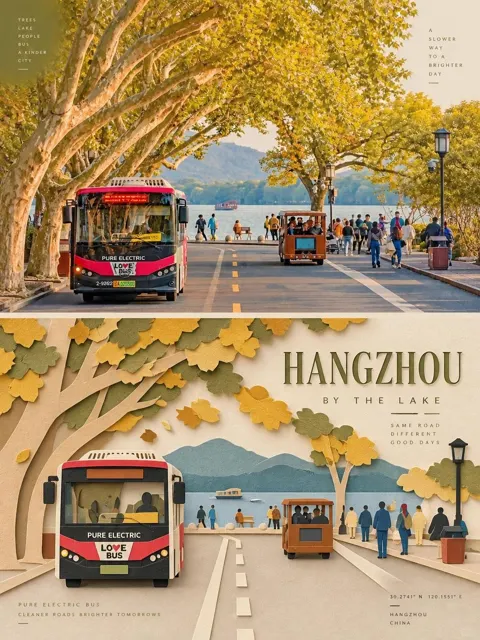
Travel photo impasto acrylic poster design
Üretici @Hamburgerai
Prompt
Please turn each travel photo I upload into an individual high-end design poster, no multi-image stitching, each photo output separately.

The overall layout uses a 3:4 vertical composition, consisting of two clearly defined areas: the real photo and a stylized transformation. The real photo occupies about 40%–50% of the entire screen, and the transformation area occupies the other main part; the two use a straight, clear horizontal boundary without feathering or bleeding. The proportions can be appropriately adjusted according to the subject, not necessarily mechanically divided, but the original image contrast must be clearly visible.

The photo area faithfully preserves the original photo's subject identity, quantity, architectural structure, terrain, people or vehicles, observation angle, spatial relationships, real materials, natural light and shadow, and original colors. Only apply restrained art publication or photography exhibition color grading, and add very thin film grain. Do not distort, mirror, move, add/delete, or reshape the subjects.

The transformation area uses a warm ivory natural paper background and retains about 38%–55% continuous paper whitespace. Do not use the full framing of the original photo for proportional redrawing, but instead extract one most recognizable subject, architectural combination, vehicle, or terrain relationship from the photo, and reorganize it into an "impasto memory miniature" placed on the paper surface.

The subject must be embedded in a piece of irregular heavy-body acrylic paint, as if growing out of the paint. The paint has a visual thickness of about 5–15 mm, clearly showing palette knife ridges, blunt bulges, deep grooves, scratches, raised thick edges, paint side walls, accumulation cross-sections, tiny paint debris, and the difference between local wet reflections and dry matte finishes. There are short and clear real contact shadows between the paint and the paper surface.

This is not paper layering, torn paper, papier-mâché, plasterboard, embossed paper, or an ordinary miniature model. The thickness must come from the volume of real acrylic paint, side walls, and palette knife marks.

Actively choose the paint island form according to the photo subject:

- High towers, churches, or building complexes can form vertically stacked paint mountains;
- Lake surfaces, roads, coasts, or vehicles can form low, horizontally extending paint islands;
- Single figures, boats, or small subjects can be shrunk and embedded in a small amount of paint strokes.

Only retain the minimum structure required to maintain the identity and story of the location. The outer edges of the buildings gradually blend into pure palette knife color blocks, paint debris, and bare paper, without forming a rectangular landscape painting. The color palette is completely extracted from the photo, compressed into 1–3 main colors, one dark color, and a small area of emphasis color.

Defaultly add a set of clearly readable editorial text:

- A location or theme title of 1–3 English words;
- An archive field similar to "STUDY NO. 01";
- An original observation sentence of 5–12 English words.

The text content must come from the location, subject, weather, action, or spatial feeling truly visible in the photo. The main title is clearly readable at normal preview size and cannot be reduced to a gray thin line. The title can be pressed into the edge of the paint as if by a palette knife, and the auxiliary text is placed in the bare paper area, using a narrow humanist sans-serif or gentle serif font with slight dry brush gaps.

The overall presentation is quiet, restrained, poetic, with a sense of real handmade weight and art publication collection quality.

Avoid: paper layers, torn paper, papier-mâché, plaster sheets, flat appliqué, flat paint patches, smooth digital brush, ordinary miniature model, plastic CGI, resin, same-crop repainting, full-background painting, rectangular duplicate photo, missing source-photo comparison, tiny unreadable text, floating digital typography, cartoon, logo, watermark, frame or wall mockup.
Metni kopyala, kendi detaylarını ekle ve kullandığın görsel modelinde dene.