Piko
Piko Promptu incele ↗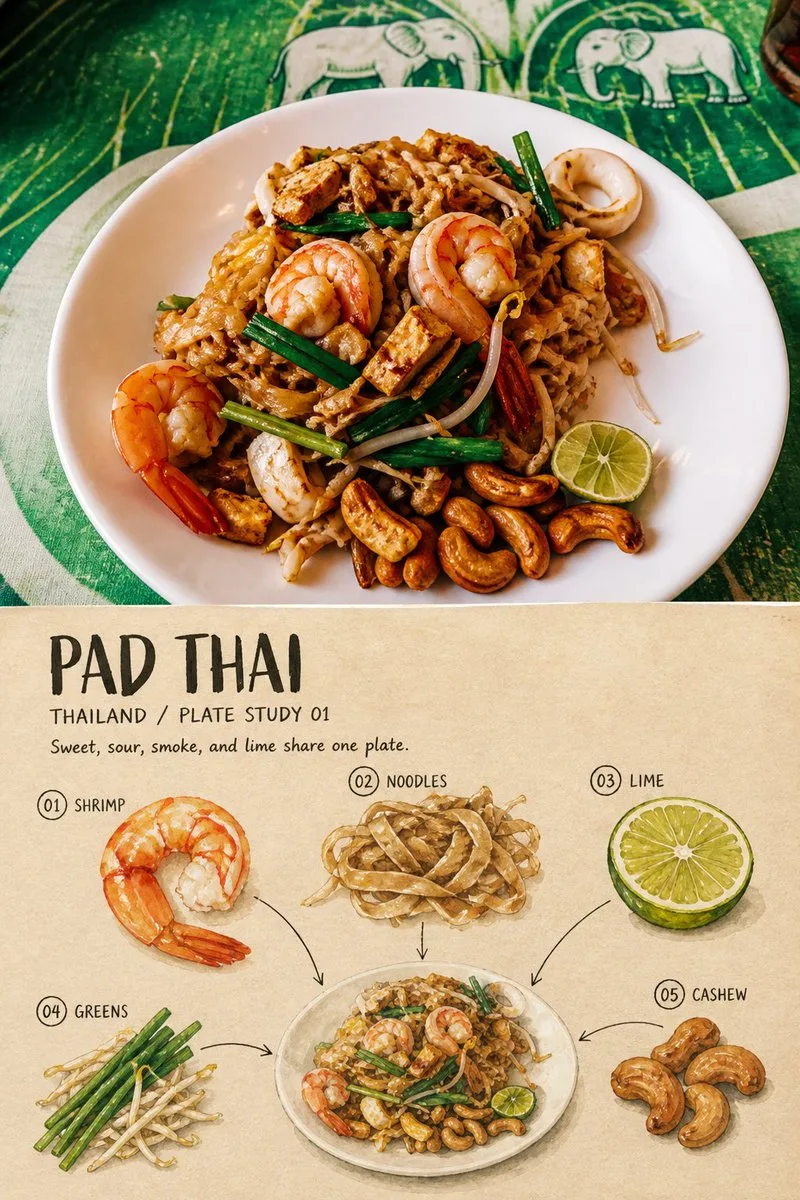
ChatGPT
TasarımChatGPT
Culinary observation travel plate poster
Üretici @Hamburgerai
Prompt
Please turn each photo of local cuisine I upload into an independent, high-end "Culinary Observation Travel Plate" editorial poster. Output each photo separately; it is forbidden to stitch multiple photos, different plates, or different dishes into the same work.

The input photo should have a complete plate or bowl as the clear subject, containing at least three identifiable components, such as staple foods, meat, seafood, eggs, vegetables, herbs, nuts, pickles, sauces, or decorative garnishes.

The overall composition is a 3:4 vertical layout, forming a clear contrast between the original food photography and the culinary observation transcription.

The upper part occupies about 45%—50% of the frame, faithfully preserving the original photo. Accurately maintain the outline of the plate or bowl, the number of ingredients, placement direction, area relationships, real texture, natural light and shadow, observation angle, and original colors. Only perform slight color grading suitable for independent food magazines and travel publications, and add a very thin film grain.

Do not re-plate, replace ingredients, move food, change portions, add decorations, or redraw real photography as illustrations in the photo area. When adapting to the frame, environment cropping can be used with restraint, but the main body of the complete plate must remain clearly identifiable.

Use a straight, clear, and restrained horizontal boundary between the upper and lower areas; a very narrow warm-toned paper gap can be kept. No gradients, feathering, dissolving, or letting ingredients cross the boundary.

The lower part occupies about 50%—55% of the frame, using warm off-white or ivory natural drawing paper, showing paper fibers, grain, slight stains, and irregular surfaces.

The lower part should not redraw the entire dish from above in the same composition; instead, decompose the same dish into a sparse culinary observation record on paper:

1. Select 3—6 truly visible and clearly identifiable components from the original photo;
2. In the center or lower part of the bottom section, draw a highly generalized but still instantly recognizable small image of the complete plate or bowl;
3. The small complete plate usually only occupies 28%—40% of the width of the lower part;
4. Extract the selected ingredients from the plate respectively, representing them as independent gouache samples, cross-sections, leaves, grain clusters, sauce color blocks, or structural sketches;
5. Use different scales and directions for different ingredients, forming a sparse, not completely symmetrical observational relationship around the small plate;
6. Use thin and slightly hesitant black ink lines, arrows, and numbers to map the ingredient samples back to their approximate positions in the plate;
7. Keep at least 35%—50% continuous off-white paper whitespace around, do not let arrows, text, and ingredients fill the entire lower area.

The lower part uses the material language of hand-painted culinary field notes:

- matte opaque gouache
- restrained black ink contours
- dry brush gaps
- uneven pigment coverage
- visible paper grain
- imperfect hand-painted edges
- subtle pencil construction marks
- handmade culinary field notebook

Forms should be highly generalized, yet still retain the most recognizable colors, outlines, cross-sections, and grain structures of the ingredients. Do not realistically copy, and do not draw as cartoon food icons.

Colors must be extracted from the original photo, compressing complex colors into 4—6 low to medium saturation ingredient-true colors. The background remains off-white, warm gray, or a very light photo-related color. Allow one warm color like sauce, egg yolk, chili, or fruit to be the visual focus, but avoid neon colors and high-saturation commercial menu color palettes.

Text must be determined word-for-word in the prompt based on photo facts, defaulting to include:

- A cuisine title of 1—3 English words;
- A location and observation number field, such as "THAILAND / PLATE STUDY 01";
- A taste or ingredient observation sentence of 5—12 English words;
- 3—6 short numbered labels, such as "01 RICE", "02 EGG", "03 HERBS".

If specific ingredients cannot be reliably identified, do not invent names; you can use: "RICE", "NOODLES", "GREENS", "SAUCE", "GRILLED ITEM", "PICKLED ITEM".

Text uses narrow handwritten recipe fonts, old recipe lead types, or gentle humanist sans-serif fonts, colored in warm black, deep taupe, or dark colors from the photo. Allow slight ink breakage, paper tooth, and manual errors.

The main title must be clearly readable at chat preview size; numbers and ingredient labels can be smaller but must not shrink into decorative thin lines. Text should be concentrated in a continuous piece of whitespace, like an observer's notes written on paper, rather than smooth digital layout overlaid later.

The overall feel should be like a traveler re-deconstructing, observing, and recording a whole plate of food after tasting a local dish: restrained, warm, clear, with a handmade feel, and also carrying a bit of taste memory and travel archive temperament.

Mandatory avoidance: Photos without a complete single-plate subject, multi-dish tables, multi-plate collages, restaurants or chefs as protagonists, fictional ingredients, adding ingredients not in the photo, proportional redrawing of the entire plate, realistic menu illustrations, dense nutritional infographics, cartoon food, smooth vector icons, plastic 3D food, full-bleed backgrounds, excessive text, prices, brands, logos, author names, signatures, dates, QR codes, URLs, social media interfaces, gibberish, fake Chinese, and watermarks.
Metni kopyala, kendi detaylarını ekle ve kullandığın görsel modelinde dene.