Piko
Piko Explore prompt ↗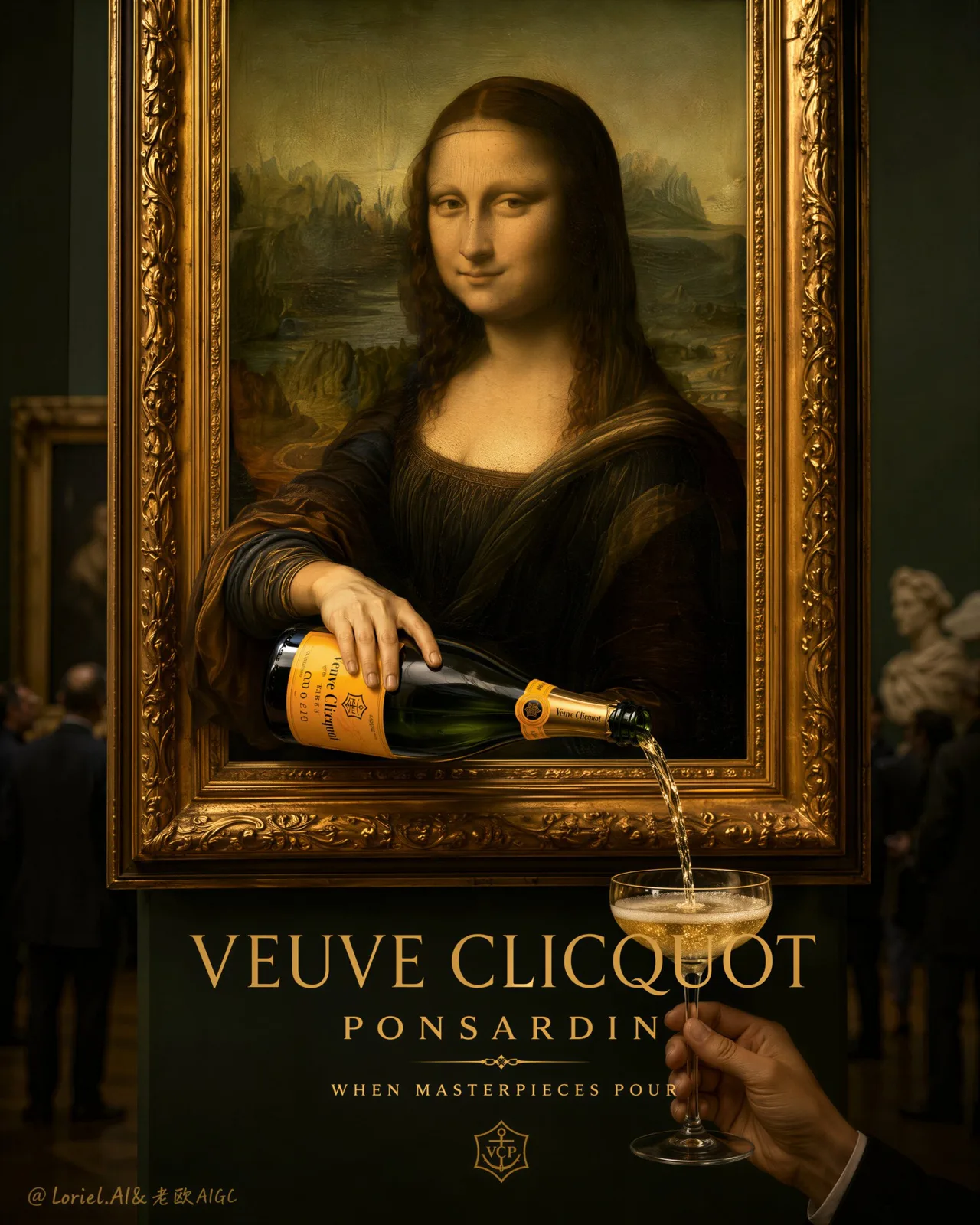
ChatGPT
ArchitectureChatGPT
Veuve clicquot mona lisa museum masterpiece ad
Creator @ou_zhen599
Prompt
Create an ultra-premium editorial advertising poster for Veuve Clicquot Ponsardin, designed as a museum-masterpiece surreal scene in which the Mona Lisa, still inside her legendary oil painting, gracefully reaches out with one hand to hold a crystal coupe glass, while an elegant real woman’s hand from outside the painting pours champagne into the glass. The image must feel cultured, witty, luxurious, and visually unforgettable, like a world-class campaign where art history and real life meet for one impossible, refined moment.

Use a tall vertical composition set inside a grand European museum gallery with deep muted green or dark moss walls, soft architectural depth, and a quiet exhibition atmosphere. A monumental gilded Renaissance frame containing the Mona Lisa-inspired portrait must dominate the upper-middle portion of the scene. The frame should feel authentic, ornate, and museum-grade, like the focal treasure of a famous gallery room.

The key visual concept is the meeting of two worlds.
The Mona Lisa must remain inside the painting, visually faithful to the spirit of a High Renaissance masterpiece:
serene expression,
subtle half-smile,
soft sfumato transitions,
dark classical garments,
and calm old-master presence.
She should not step out of the painting completely.
Instead, one of her hands extends naturally toward the lower edge of the frame, holding a refined crystal coupe glass just outside or at the threshold of the frame, as if receiving an offering from the real world.

From outside the painting, introduce only the hand and partial forearm of a real elegant woman, entering the composition from the side or lower side of the frame. This hand must feel modern, refined, and physically real:
beautiful anatomy,
slender fingers,
graceful grip,
clean skin realism,
and controlled posture.
She is holding a real Veuve Clicquot Ponsardin bottle and pouring champagne toward the coupe in Mona Lisa’s hand.
The outside woman herself must remain unseen; only the hand and bottle should appear, making the gesture feel intimate, mysterious, and sophisticated.

Render the Mona Lisa and the painting with museum-grade fidelity:
authentic oil-paint texture,
subtle craquelure,
aged varnish glow,
fine tonal glazing,
Renaissance softness,
and historical gravitas.
The painting must still feel like a true masterpiece, not a parody or costume recreation.

The Veuve Clicquot Ponsardin bottle must be rendered with absolute product fidelity:
authentic green champagne bottle,
correct Veuve Clicquot yellow label,
legible branding,
accurate foil and neck wrapping,
premium glass reflections,
and unmistakable luxury champagne identity.
The bottle must feel like the sharpest and most tangible object in the scene, clearly visible and product-dominant without disrupting the artistic harmony.

The champagne pour must be exquisitely realistic and elegant:
a fine golden stream,
subtle sparkling bubbles,
clean transparent liquid flow,
minimal foam at the bottle mouth,
and physically believable motion.
The liquid should feel ceremonial, graceful, and elevated.
No messy splash.
No comic spill.
No chaotic droplets.
The pour must land cleanly into the coupe glass in Mona Lisa’s hand, creating a miraculous yet believable moment of exchange between painting and reality.

The emotional contrast is essential:
Mona Lisa should retain her famous calm, enigmatic serenity,
while the surreal act of receiving champagne from the real world creates the shock and sophistication of the image.
The scene should feel impossible, elegant, and quietly humorous, never slapstick.

Lighting:
use soft cinematic museum lighting with painterly richness and restrained golden highlights.
The gilded frame should glow warmly,
the bottle should catch crisp premium reflections,
the champagne stream should shimmer with delicate clarity,
and the painted face should preserve Renaissance softness and mystery.
All shadows must remain breathable and clean, with no muddy blacks, dirty blotches, or noisy shadow contamination.

Background:
keep the museum environment elegant and minimal,
with only subtle gallery depth, possibly blurred sculptures or distant visitors far in the background if needed for atmosphere.
No clutter, no busy crowd, no excessive props.
The focus must remain on the frame, Mona Lisa’s receiving gesture, the outside hand, the bottle, and the champagne stream.

Color palette:
Veuve Clicquot yellow,
museum gold,
dark green gallery walls,
aged brown-black oil-paint shadows,
warm skin ivory,
old varnish amber,
antique wood tones,
and soft champagne-gold highlights.
The palette should feel aristocratic, cultured, and unmistakably premium.

Typography must follow a refined luxury museum-poster layout.
Use a sophisticated English title such as:
“VEUVE CLICQUOT”
Below it, in smaller elegant uppercase text:
“PONSARDIN”
Optionally add a supporting line such as:
“WHEN ART RECEIVES CLICQUOT”
or
“A MASTERPIECE, SERVED”
Typography must feel artistic, luxurious, and exhibition-worthy, never loud or cheap.

Mood:
museum surrealism, cultured wit, masterpiece realism, aristocratic elegance, intimate impossibility, luxury champagne ritual, cinematic sophistication.

Rendering style:
hyper-real luxury advertising, museum-grade old-master realism, Mona Lisa receiving champagne from a real outside hand, premium product photography, elegant pouring liquid dynamics, cinematic gallery lighting, refined exhibition typography, 8k, world-class campaign quality.

Negative prompt:
cartoon Mona Lisa, parody meme style, crude comedy, messy spill, wrong yellow label, fake champagne bottle, chaotic museum crowd, low-detail painting texture, cheap costume reenactment, exaggerated facial expression, cluttered background, muddy shadows, black blotches, noisy dark areas, rough typography, low-end viral content aesthetic
Copy the text, add your own details, and try it in your image model.