Piko
Piko Explore prompt ↗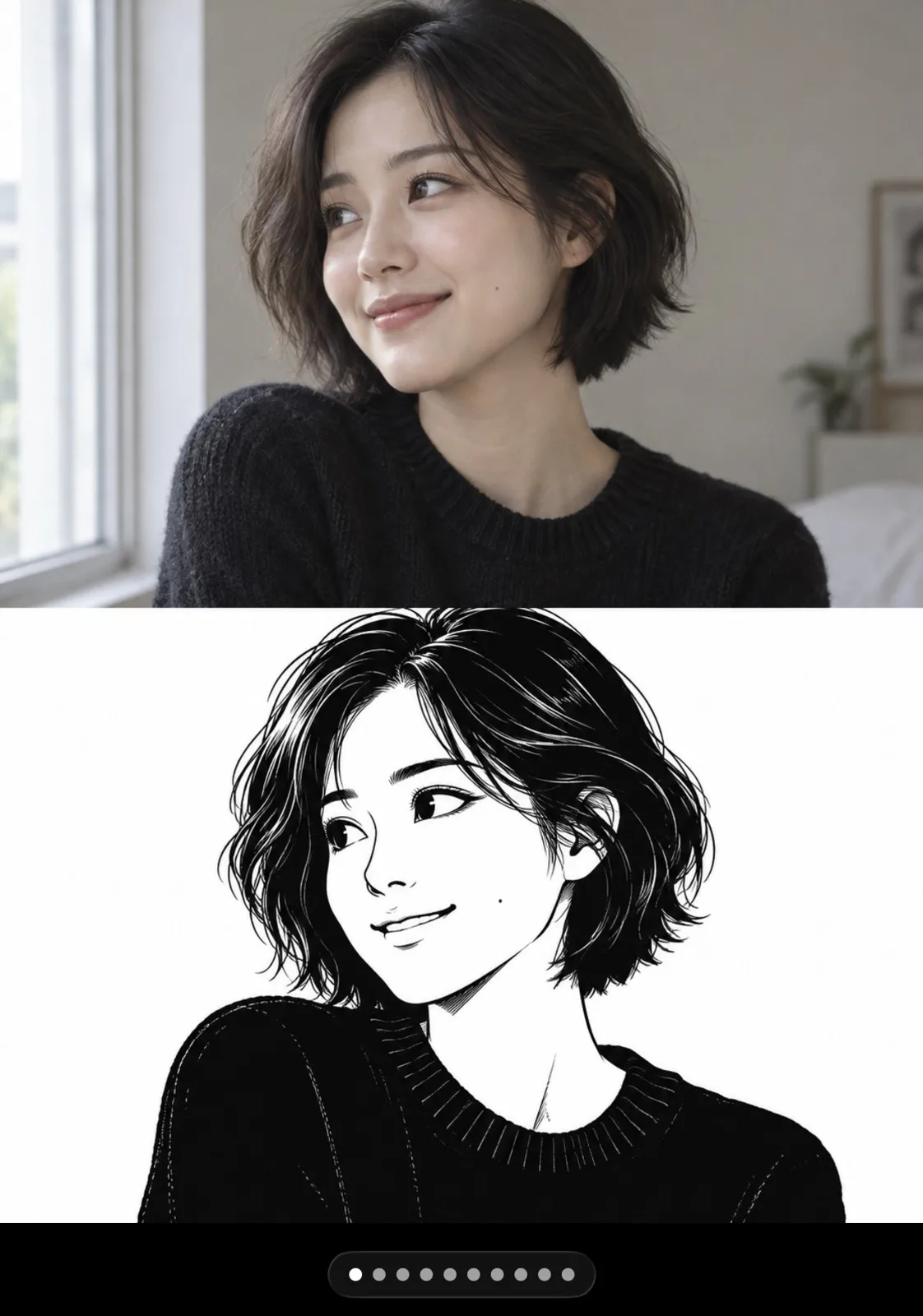
ChatGPT
PhotographyChatGPT
Vertical split photo to 70s animation line art
Creator @zhidawang219555
Prompt
Create a vertical split-style image. The entire canvas is strictly vertically arranged, with the top and bottom halves precisely 1:1 in height, forming a clear and complete vertical visual contrast relationship.

Top half:
Directly present the original image uploaded by the user, treating the original image as the sole primary reference source. Focus on preserving the core subjects such as people, pets, or animals from the original image, prioritizing the extraction of the subject's facial features, hairstyle or fur characteristics, facial features, expressions, postures, clothing, accessories, body contours, and overall temperament.
If buildings, indoor environments, street scenes, furniture, landscapes, etc., appear in the original image, these are not the primary objects of expression and only exist as weakened auxiliary backgrounds.
The top half as a whole maintains a sense of real photography, natural lighting, and original shooting atmosphere, making it obvious at a glance that this is the original reference image itself; do not make the top half into an illustration or a stylized redraw.

Bottom half:
Reconstruct the same person/same pet/same animal subject from the top half into a black and white ink line drawing.
Highlight the most recognizable features of the subject, not mechanically copying photo details, but preserving the most identifiable face shape, silhouette, posture, expression, action relationship, and identity temperament.
The overall style adopts the 2D animation aesthetics of the 1970s, emphasizing bold and rhythmic high-contrast outlines, sharp and clear line art, minimalist but hierarchically varied line width control, and the graphic language of old animation clean-up drawings.
The image uses a high-key composition and adds a pure white backing around the subject or in local areas to make the subject emerge more clearly from the background.
Only black and white are allowed; do not add shadows, colors, grayscale, or midtones; do not do sketch-like light and shadow modeling, and do not add color accents.
The bottom half does not pursue complex environmental depiction but instead forms a black and white visual effect with a sense of era, graphics, and animation through the weight, density, and generalization of outlines.
If the original subject is a person, highlight the expression, hairstyle, movement, and clothing silhouette; if it is a pet or animal, highlight the ears, fur edges, eyes, posture, and rhythm of movement.
The overall effect should make people clearly feel: the top is the real original image, and the bottom is the same subject translated into a 1970s black and white animation ink line image.

Overall requirements:
There must be a clear correspondence between the top and bottom parts, ensuring the bottom part is instantly recognizable as a stylized translation of the subject in the top part.
The image should be clean, restrained, and designed, without generating redundant text, logos, or watermarks; no irrelevant subjects should appear, and buildings or background elements should not seize the visual center.
Copy the text, add your own details, and try it in your image model.