Piko
Piko Explore prompt ↗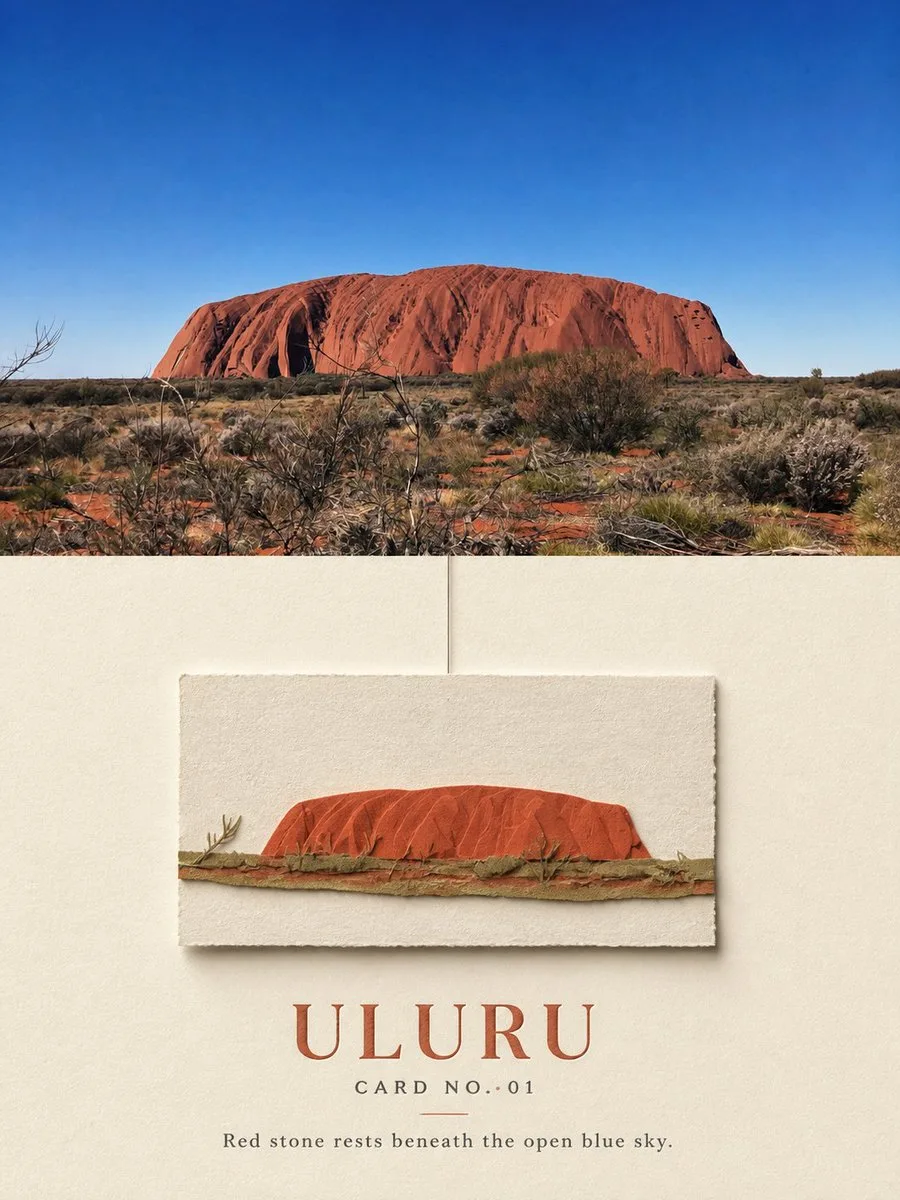
ChatGPT
DesignChatGPT
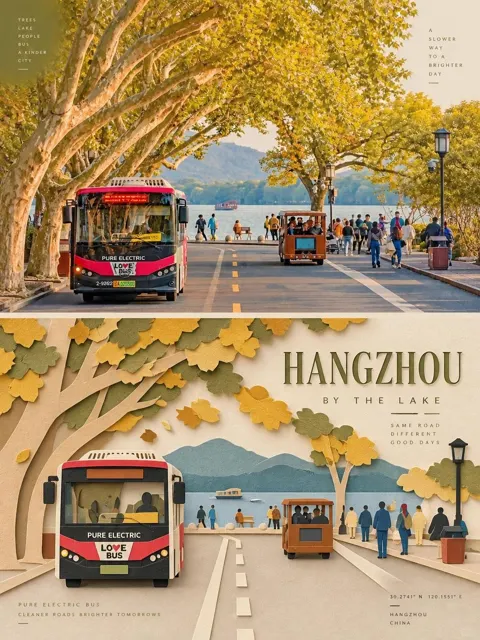
Suspended paper card terrain travel poster
Creator @Hamburgerai
Prompt
Please turn each travel photo I upload into an individual high-end design poster, with one photo corresponding to one finished product, and no collaging of multiple photos in the same frame.

The overall layout uses a 3:4 vertical composition. The image consists of a clearly separated photography area and a paper art conversion area, with a straight, clear, and restrained horizontal boundary between the two areas, without blurred blending, tearing, infiltration, or material overlap.

The upper photography area accounts for about 45%—50% of the entire image. Faithfully retain the identity, number, posture, direction, architectural structure, terrain relationship, observation angle, real material, natural light, and original color atmosphere of the subject in the original photo. Only perform slight travel magazine, independent publication, or photography exhibition-level color grading, and add very thin film grain. The upper part must remain a clearly identifiable real photograph and must not be changed into an illustration, and the subject must not be moved, replaced, mirrored, stretched, or redesigned.

The lower part accounts for about 50%—55%, reconstructing the same scene as "SUSPENDED PAPER CARD TERRAIN".

On warm off-white matte paper, suspend a small, open handmade paper card or terrain slice. The paper card occupies about 35%—50% of the lower area, located in the center, lower middle, or slightly offset according to the direction of the subject; about 40%—60% continuous blank paper surface is reserved around it.

Use an extremely thin vertical suspension line, paper pin, or almost invisible suspension point to connect the paper card. The suspension line can only exist in the lower paper art area and must not enter the upper photo.

The paper card is not a flat card printed with scenery. The core subject, roads, tracks, waterfronts, ridges, bridges, or steps in the photo should grow from the card's own slots, folded paper surfaces, and bas-relief layers.

From the original photo, only extract:

- One most recognizable subject or landmark;
- One spatial clue that determines the scene's narrative;
- Two to three layers of necessary terrain;
- A small amount of plant, wave, vehicle, or human fragments as scale prompts.

Actively delete, merge, and shrink complex environments, and do not replicate the entire photo in proportion. Express the structure through two or three layers of thin paper, continuous narrow cuts, shallow indentations, natural paper fibers, slight curls, open paper edges, and restrained short shadows.

The paper art subject must retain the most critical outlines, directions, relative positions, and signature colors from the original photo, so that the viewer can still identify the original location at a glance. Extract 4-7 colors from the photo and soften them, with off-white paper occupying the main area, keeping only one most recognizable accent color.

In the continuous white space outside the paper card, add:

- An accurate title of 1—3 English words;
- A "CARD NO. 01" style number;
- A short observation sentence of 5—10 English words.

The text must be determined word for word in advance. Use shallow debossing, letterpress, narrow serif, or restrained sans-serif fonts, as if crafted on a collection page with the paper card. The main title must be clearly readable at chat preview size; the auxiliary text can be smaller, but cannot be compressed into a blurry gray line.

Overall temperament is light, quiet, poetic, and restrained, like a travel memory collected on paper by a thin line. Poeticism comes from scale, white space, paper, and a soft sense of gravity, rather than fairy tale characters or complex decorations.

Avoid: small round planets, fairy tale asteroids, generic floating islands, complete realistic sandboxes, thick foam boards, plastic toys, smooth 3D, heavy shadows, dense paper-cut plants, busy scrapbook collages, redrawing the entire photo with different materials, proportional conversion of the same composition, missing original photos, photos shrunk into decorative thumbnails, blurry boundaries, suspension lines passing through photos, author names, book titles, quotes, logos, brands, URLs, watermarks, gibberish, and extra text.
Copy the text, add your own details, and try it in your image model.