Piko
Piko Explore prompt ↗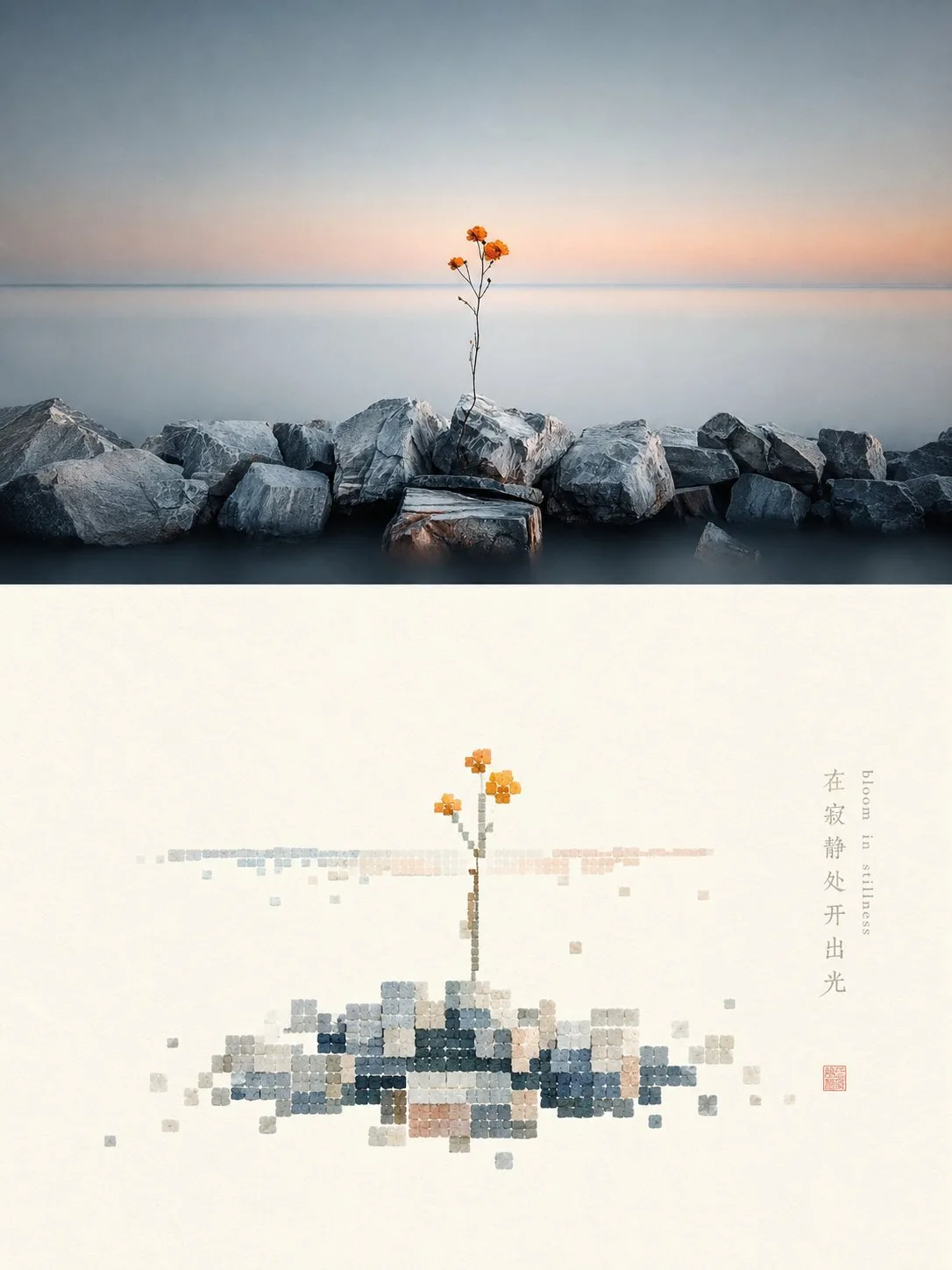
ChatGPT
DesignChatGPT
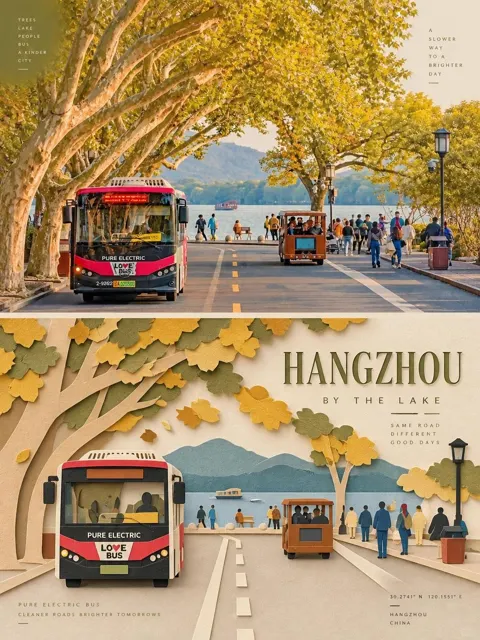
Shell textured pixel art minimalist poster design
Creator @xiaoxiaodong01
Prompt
Please make each photo I upload into an independent high-end design poster, no multi-photo stitching, each photo output individually. The overall composition adopts a 3:4 vertical format, with the upper and lower areas strictly 1:1 in height, each occupying 50% of the screen. The upper part retains the original photo, maintaining the subject's identity, structure, posture, real texture, natural light and shadow, and the original color atmosphere, only performing slight high-end color grading to give it the quality of an art magazine, independent publication, or exhibition image. To adapt to the frame, the environmental background can be naturally extended, but the subject must not be stretched, distorted, or changed. The lower part first understands the subject, basic composition, perspective relationship, structural trends, visual memory points, and overall atmosphere of the original photo that are most worth remembering, and then reconstructs them into a minimalist pixel landscape with a sense of material collage. Do not copy the photo completely, but delete irrelevant details, retaining only the structures, trends, and visual memory points that best represent the original object, re-summarizing through the order of regular squares and natural material textures, so that people can recognize the correspondence between it and the photo above at a glance. The pixel modules are not standard digital color blocks, but like small square and near-square fragments cut from coarse shells, shell flakes, or natural mineral shells. Maintain a clear geometric grid order, but the edges can be slightly chipped or not completely regular, with natural layering, powdery particles, slight bumps, wear, and uneven colors on the surface, mainly with a matte, natural, and gentle material feel. The core area of the subject is formed by relatively dense modules aggregating, and the edges gradually decrease, disappear, disconnect, and float, allowing the form to dissipate naturally from clarity into whitespace. Strictly control the total number of modules, not exceeding 200 in total, with uniform or near-uniform size for individual modules, avoiding fine noise, standard mosaics, and game pixel vibes. The composition maintains the relationship between small-scale seals/stamps and large areas of whitespace, freely arranging positions according to the subject's own direction, proportion, and visual center of gravity, which can be eccentric, edge-aligned, suspended, or partially cropped. The subject occupies about 30%–45% of the lower half, and the rest of the space is actively left blank. Whitespace is not an empty background, but a constituent element as important as the subject, module density, and fading boundaries, establishing a sense of breath, space, and pause through positive and negative shapes, density, aggregation and dispersion, and asymmetrical balance. Better to subtract information than to fill the screen, making the subject like a material seal/stamp carefully placed on a large sheet of paper. The color scheme is extracted from the most bright, vivid, and vital colors in the photo above and re-modulated, rather than average color sampling or faithful replication of original color values. Appropriately increase the brightness, purity, and transparency overall, naturally deriving bright comprehensive colors such as clear sky blue, lake cyan, tender green, warm yellow, coral orange, peach pink, etc., according to the original image, forming a warm and healing color rhythm through refreshing warm and cold relationships. Use a large amount of pure warm white or extremely light near-white coordinated with the original image's overall color temperature as breathing space; the main color is bright and spirited but not dazzling, and local warm orange, golden yellow, coral red, or soft pink can serve as sun-like finishing touches. Retain the slight natural color difference and layering of the shell material itself, but avoid turning gray, old, or dirty because of it. Avoid gray-dirty, old-looking, low-spirited Morandi-fication, dark brown filters, gloomy earth tones, fluorescent colors, and cheap candy feelings. Text is only used with minimal editorial intervention, without language restrictions or preset fixed titles or numbers. A small number of words or short sentences can be freely extracted from the photo's subject, location, action, emotion, or metaphor, quietly placed in the whitespace or at the edge of the subject, forming an exquisite graphic relationship with the material modules, without overwhelming the primary elements. The overall presentation is a high-end visual effect composed of natural material collage, shell-textured pixels, regular geometric order, progressive fading, small-scale seals, large-area artistic whitespace, and modern editorial layout, more like a reconstructed poster from a contemporary material art and design studio rather than an ordinary digital pixel painting. Avoid complete replication of photos, complex backgrounds, realistic details, standard solid color blocks, smooth vectors, plastic mosaics, strong pearlescence, game UI feel, filled screens, excessive text, and templated effects.
Copy the text, add your own details, and try it in your image model.