Piko
Piko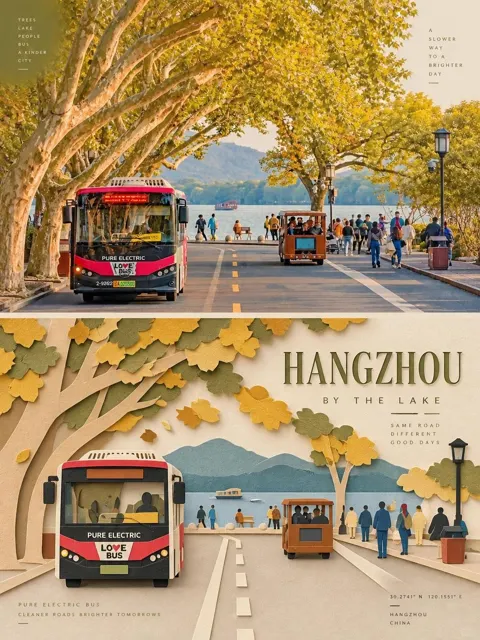 Explore prompt ↗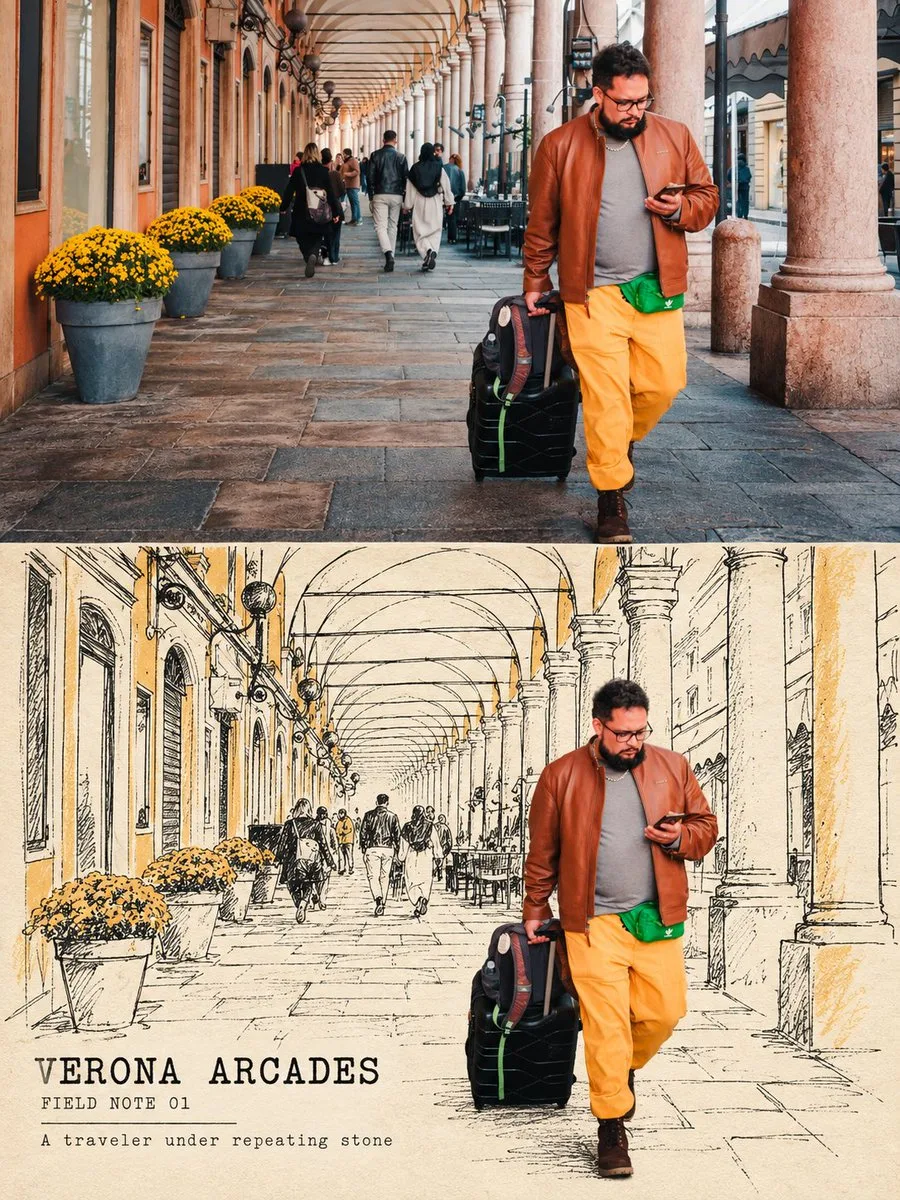
ChatGPT
DesignChatGPT
Real traveler embedded in hand drawn location poster
Creator @Hamburgerai
Prompt
Turn the buildings, streets, sky, water, or terrain behind the figures into broken-line drawings. This creates a visual tension of "real figures embedded in hand-drawn locations," where the figures' identity, posture, clothing, luggage, and proportions are not destroyed by line work, while the background gains warm paper, black ink, negative space, and a sense of manual observation.

Please make each travel photo I upload into an individual high-end travel editorial poster, outputting each photo separately without multi-image collage.

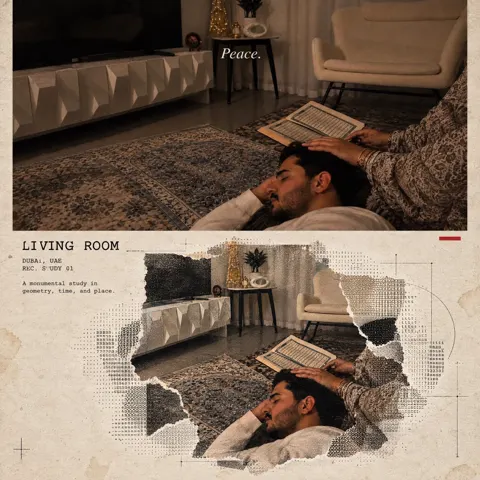
The overall composition uses a 3:4 vertical format, forming a clear "upper real photo + lower real figures and line-drawn background" top-to-bottom contrast. The height of the upper and lower areas is approximately 1:1, and the boundary must be horizontal, clear, and restrained; do not use feathering, tearing, or gradient blending, and do not let the two areas contaminate each other.

The upper part fully preserves the uploaded photo itself. Maintain the number of figures, identity, facial or back features, body proportions, posture, direction of movement, clothes, hats, backpacks, luggage, buildings, landmarks, observation angles, natural lighting, and real photographic texture. Perform only slight high-end photographic color grading, and do not stretch, distort, mirror, move, replace, or redraw the subject.

The lower part must preserve the real photographic figures from the original photo. The figures continue to have a photographic texture: real skin, hair, clothing, backpacks, luggage, shoes, lighting, and natural edges must be maintained; do not turn figures into illustrations, cartoons, line drawings, silhouettes, or vector shapes; do not add black outlines to figures; and do not change figures' postures, clothing, proportions, numbers, or positional relationships.

Only the background of the figures in the lower part is redrawn into a broken-line pen observation drawing on warm off-white paper: buildings, arcades, streets, cobblestone paths, bridges, water surfaces, sky, plants, and distant views use broken, paused, folded-back, misplaced double lines, local re-sketching, sparse hatching, and unfinished line ends. Remove irrelevant textures and tiny objects, preserving the structure, perspective direction, and landmark outlines that allow identification of the original scene. The figures should be naturally embedded in the line-drawn background, like real travelers standing in a hand-drawn location map.

The lower part should retain at least one continuous low-information paper area to provide space for a small amount of text. Text is placed only in the lower part: a title of 1—3 English words; one line of "FIELD NOTE 01" or an object field; one line of 5—12 English words of observation sentences. The text uses ink-deficient type, typewriter fonts, or narrow humanistic sans-serif, appearing as if printed on paper, and must not cover the figures, nor include author names, logos, URLs, QR codes, fake dates, signatures, garbled characters, or watermarks.

Key hard constraints: The upper half is a real photo; the lower half is real photographic figures + line-drawn background. Figures are not redrawn; the background is redrawn. Do not generate a second illustrated figure, do not turn the figure outlines into line art, and do not make the lower half a complete scene line drawing.

Overall temperament: real photographic figure embedded in a fragmented ink-drawn travel environment, warm archival paper, broken black pen lines, sparse architectural observation, restrained accent color, editorial travel study, quiet handmade texture.

Avoid: full-body redraw, illustrated person, cartoon person, ink contour around the person, altered face or pose, changed clothing, changed luggage, extra people in foreground, multiple-photo collage, full-poster filter, same-crop tracing, vector-clean background, watercolor wash, oil paint, anime, 3D rendering, invented landmarks, fake logo, watermark, gibberish text.
Copy the text, add your own details, and try it in your image model.