Piko
Piko Explore prompt ↗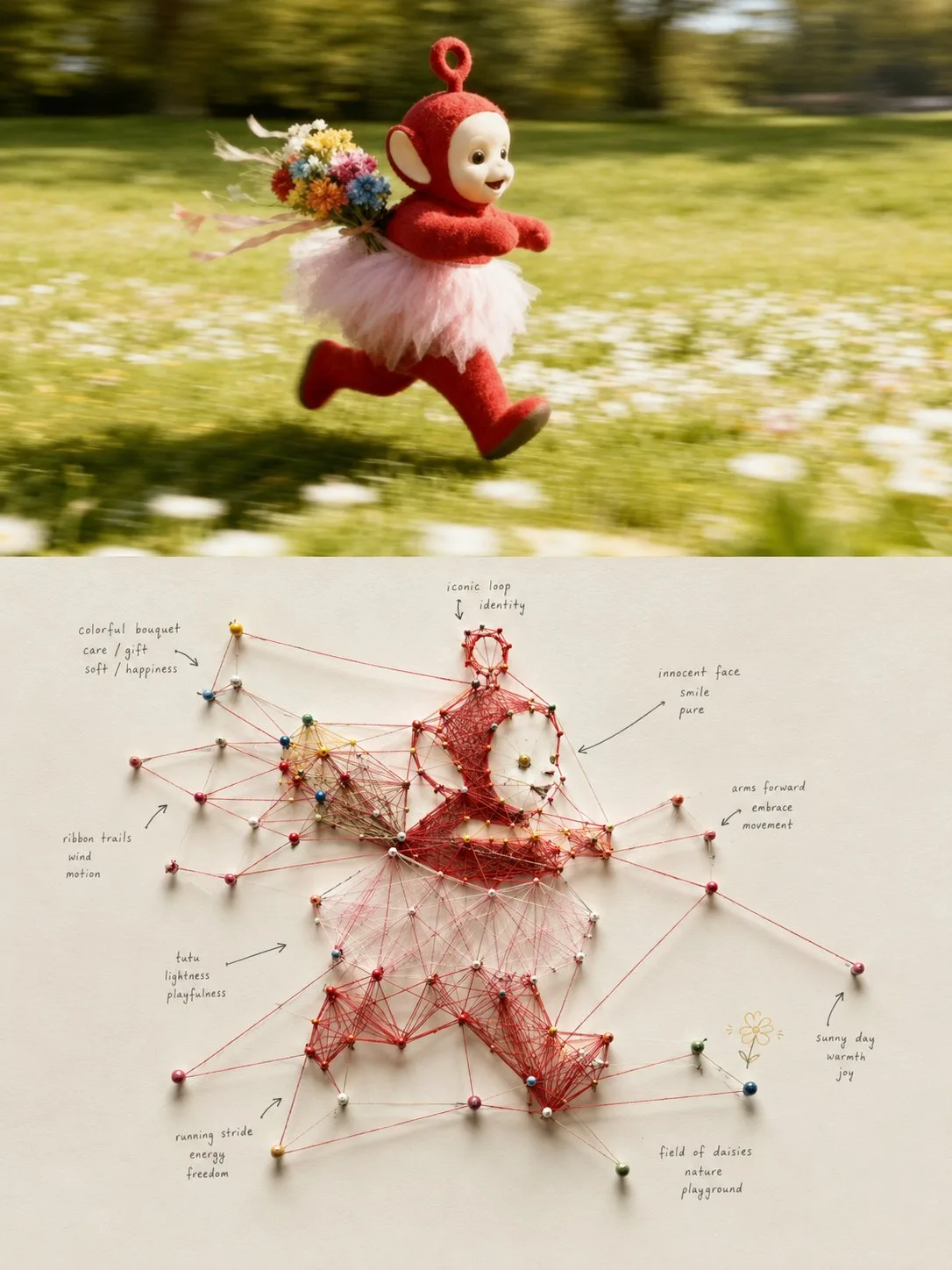
ChatGPT
DesignChatGPT
Physical red string node mapping poster
Creator @xiaoxiaodong01
Prompt
Please turn each photo I upload into an independent high-end design poster, no multi-image stitching, each photo output individually. The overall composition uses a 3:4 vertical layout, with the top and bottom areas strictly 1:1 in height, each occupying 50% of the screen.

The top half retains the original photo, maintaining the subject's identity, structure, posture, realistic texture, natural light and shadow, and original color atmosphere, with only slight high-end color grading to give it the texture of an art magazine, independent publication, or exhibition image. To adapt to the frame, the environmental background can be naturally extended, but the subject must not be stretched, distorted, or changed.

The bottom half extracts the most recognizable subject, outline, structure, posture, and narrative relationship from the photo, translating it into a realistic and touchable Physical String-based Systems Map / Tangible Node-link Visualization. Do not directly depict the original object; instead, dismantle the subject into a small number of meaningful nodes and relationships: key outlines, structural transitions, movement directions, spatial positions, or environmental clues become pin-style Nodes, using real string as Edges / Links between each other, so that the visual relationships of the original photo are manifested again as a physical network, while the identity and structure of the original subject remain faintly recognizable.

The composition uses a clear core node or core relationship as the visual hub, with other nodes naturally unfolding around the main structure. The strings are not randomly wound but should establish relationships based on the direction, proportion, distance, connection, and narrative logic of the original image; some nodes form radial, convergent, triangular, polygonal, and cross-regional connections, causing a large number of simple relationships to naturally produce emergent geometry. The whole is both complex and orderly, with denser central relationships and gradually sparser peripheries, retaining sufficient negative space to avoid filling the entire layout.

Materials must have a sense of a real physical installation: use tiny pushpins, stitches, cotton thread or twine, paper labels, handwritten marks, and real cardboard surfaces, preserving slight differences in string tension, node height, cross-occlusion, stitch shadows, and manual errors. The whole looks like an art-directed research wall, system design experiment, or information art installation, rather than a computer-drawn network diagram, and should not have cyber UI, digital glowing lines, or cheap detective board effects.

The string uses a vivid but restrained cinnabar red, coral red, or warm red as the primary relational color, creating visual tension against a large amount of natural white, warm white, light gray, or very light backgrounds coordinated with the comprehensive color temperature of the photo above; pushpins, paper tags, and a small number of marks can extract local characteristic colors from the photo above for low-area correspondence. The overall color is clean, modern, and vibrant, avoiding dark brown, dirty old, blood-red horror, and excessive retro distressing.

Text intervenes freely as Hand-lettered Annotation in the system, without pre-setting fixed titles, locations, years, or menu-style information. Based on the subject, action, position, emotion, relationship, or metaphor in the photo, freely generate a small number of keywords, short phrases, arrows, circled notes, or miniature descriptions, and write them directly near nodes, string intersections, or white space areas. The font uses small, loose, handwritten annotation fonts with a slight sense of research notes and writing deviations, letting the text be like natural traces of thought left during the observation process, while maintaining the restraint and readability of high-end editorial design.

Overall, it presents a high-end experimental visual composed of physical nodes, red strings, relationship mapping, emergent geometry, handwritten annotations, and a large amount of white space. Whether the subject is a person, animal, plant, building, object, vehicle, natural landscape, or complex scene, it should further translate 'what it is' into 'how its parts relate', forming a physical information visualization with a sense of research, art, systematicity, and manual warmth. Avoid random red lines, meaningless nodes, full-page chaos, horror crime boards, digital network UI, cartoon pushpins, templated mind maps, and ordinary flowcharts.
Copy the text, add your own details, and try it in your image model.