Piko
Piko Explore prompt ↗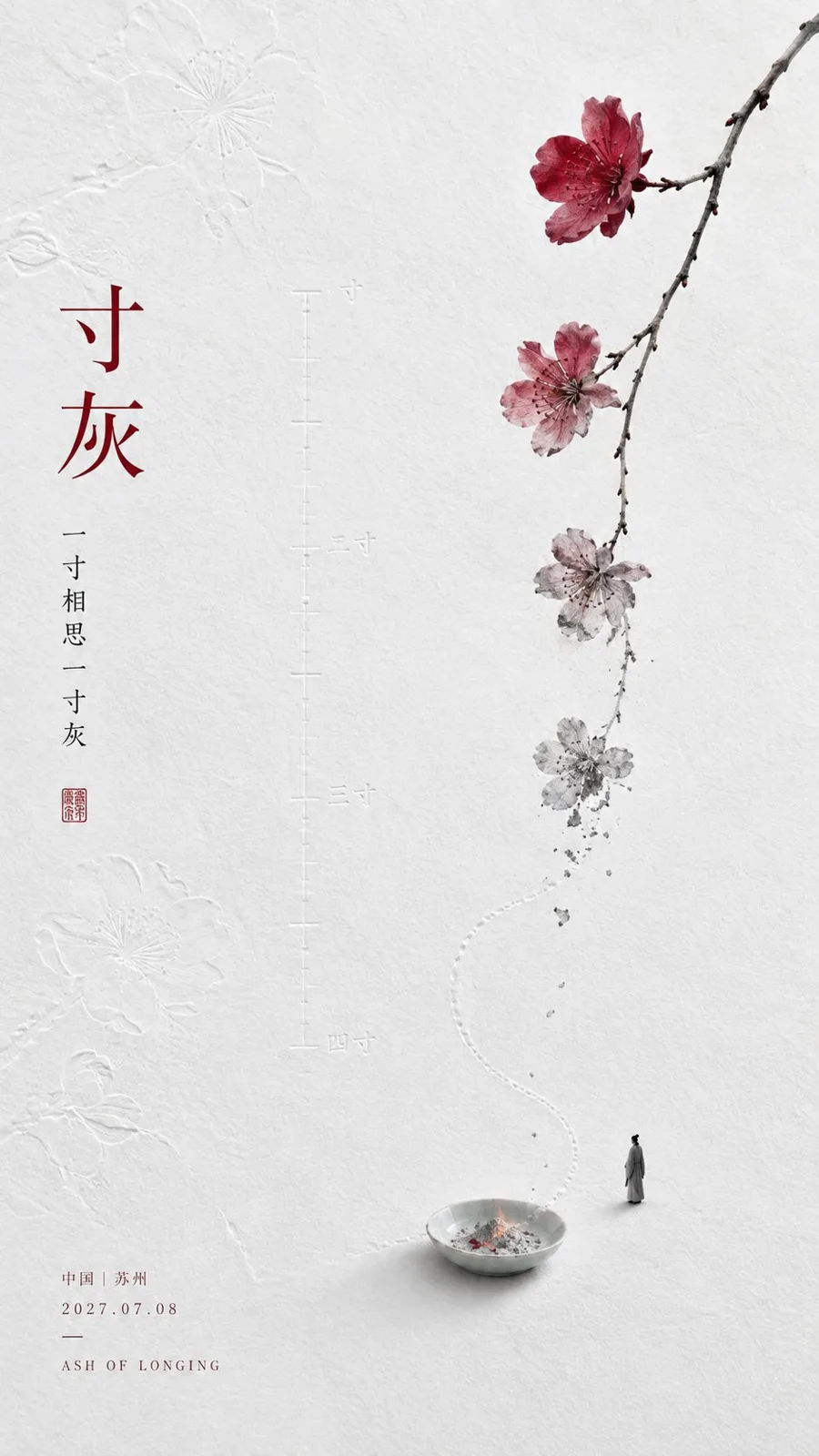
ChatGPT
DesignChatGPT
Oriental poetic white space art poster prompt
Creator @MrLarus
Prompt
[Original Poetry Sentence]: Fill in a line of ancient poetry with subtle emotions and imagery
[Two-Character Theme]: Extract 2 core characters from the poem
[Core Emotion]:
[Small Subject]:
[Main Color System]:
[Shallow Embossing]:
[Location and Date]:

Generate a 9:16 vertical Oriental poetic white space art poster, transforming the [Core Emotion] from the [Original Poetry Sentence] into a visible emotional state.

Use pure white or slightly cool-toned high-end handmade art paper as the background, preserving real paper fibers, pulp particles, and natural indentations. Maintain approximately 65%–75% effective white space; the main subject should not be too large, the [Small Subject] is suggested to occupy only about 8%–20% of the frame, letting the white space itself participate in expressing distance, waiting, memory, and a sense of incompleteness.

Do not directly replicate the complete scene from the poem, but instead choose a small and clear object as an emotional anchor, then express the emotional state through color changes, disappearance, accumulation, afterimages, or movement paths.

Add a low-contrast bas-relief [Shallow Embossing] related to the theme in the background. The embossing must not be just decorative, but must represent traces that once existed, are changing, or have not yet arrived, such as gradually rising old water levels, repeated misaligned butterfly wings, fading flower shadows, wing marks after flying, or wind lines extending into the distance. Keep it clean from afar, and only discover hidden information when looking closely.

Use [Main Color System] for colors, which can be vivid, beautiful, and emotional; do not use only black, white, and gray just because the theme is sad. Colors should naturally produce shade, fading, transparency, or dissipation relationships with distance, time, or state.

All water lines, silk threads, wind lines, rain marks, and movement trajectories must be continuous, soft, and natural, avoiding a large number of break points, fragmented lines, and messy AI textures.

Extremely small figures can be added, but they don't have to appear in every image. Figures are only used to establish scale and emotion; they do not cry or perform dramatic actions. Figures can also be completely removed, letting small subjects like flowers, rain, butterflies, or birds independently carry the narrative.

Use the [Two-Character Theme] for the main Chinese title, using modern Songti, Mingti, or editorial-style Chinese serif fonts. Design sense can be added through character spacing, slight misalignment, thin lines, or partial extensions, but the Chinese characters must be complete, accurate, and clear.

At the same time, add small font poetry lines, location, date, and a short English title.

The overall effect should be like a combination of classical poetry emotion, paper material experimentation, bas-relief art, and modern Editorial Design: concise with white space at first glance, seeing the subject at the second glance, and only discovering those "unfinished" traces when looking closely.
Copy the text, add your own details, and try it in your image model.