Piko
Piko Explore prompt ↗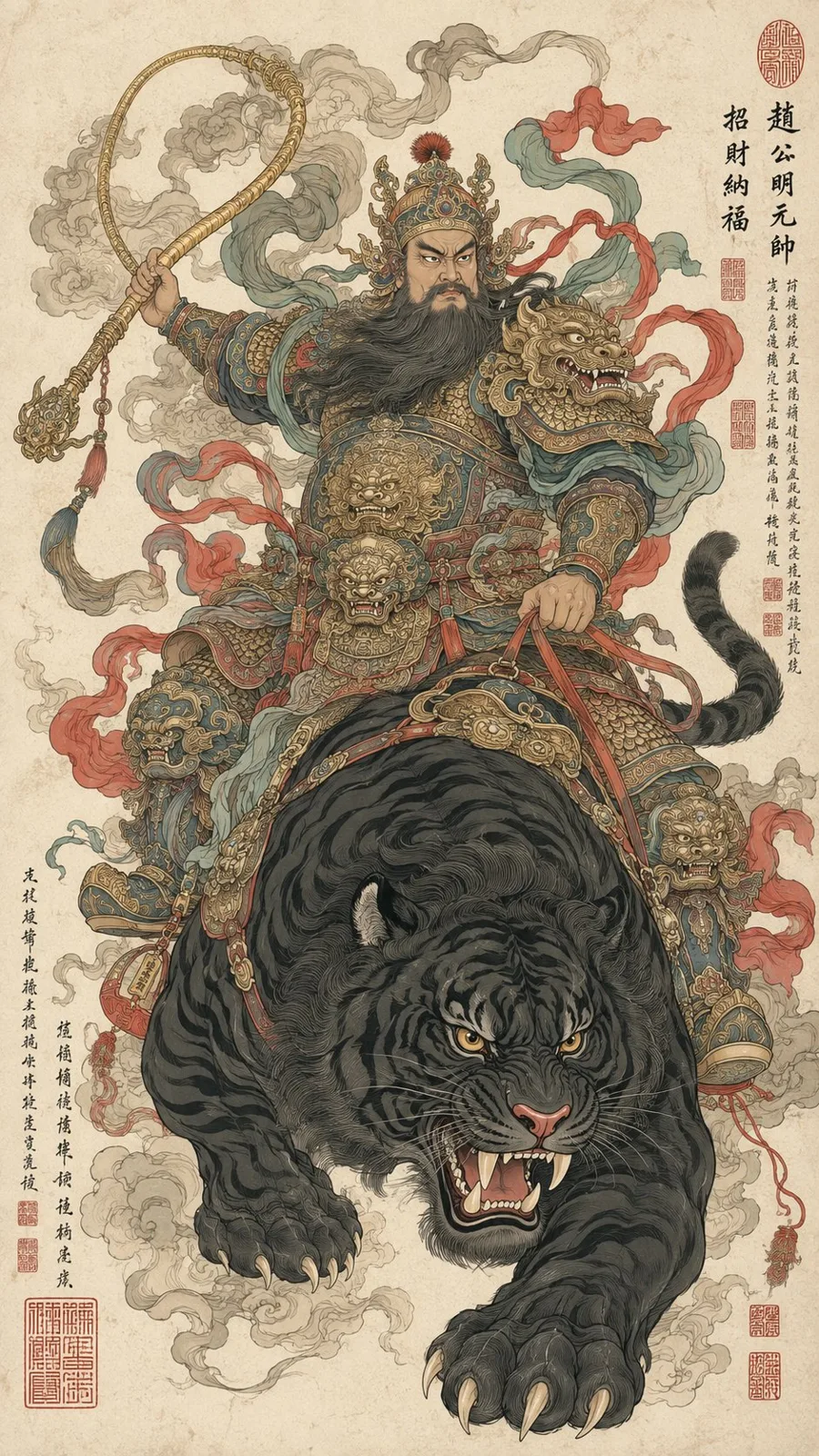
ChatGPT
IllustrationChatGPT
Oriental deity mythical beast gongbi icon illustration
Creator @MrLarus
Prompt
[Replaceable Content]

Deity Identity: [e.g.: Zhao Gongming / Zhenwu Emperor / Erlang Zhenjun / Self-created Divine General]
Spirit Beast Type: [Black Tiger / Divine Dog / Black Tortoise and Snake / Thunder Lion / Qilin, etc.]
Weapon / Dharma Vessel: [Spear / Divine Sword / Thunder Hammer / Iron Whip / Staff, etc.]
Main Color Palette: [Mysterious Black Bronze Gold / Mineral Blue Silver Gray / Cinnabar Dark Gold, etc.]
Overall Temperament: [Majestic / Evil-suppressing / Thunderous / Stern / Sacred / Hunting Sensation]
Composition Direction: [Frontal Suppression / Diagonal Impact / Surrounding and Circling / Side-by-side Battle]
Aspect Ratio: [9:16]

Generate an illustration of an Oriental deity riding a mythical beast, overall integrating the visual language of traditional Chinese deity paintings, Gongbi heavy color, white-line drawing (Bai Miao), folk woodblock prints, and ancient scripture holy icon scrolls.

The screen uses "Deity + Spirit Beast" as the dual subject. The deity serves as the core visual subject, while the spirit beast has a large enough volume and presence. A clear movement relationship is formed between the two, which can be riding, guarding, fighting side-by-side, or surrounding and protecting, rather than a simple collage.

The character's face is majestic, divine, and possesses a sense of oppression, avoiding modern idol faces and excessive demonization. The clothing adopts high-completion traditional divine general armor or dharma robes, incorporating precise decorations such as cloud patterns, thunder patterns, beast face patterns, scale armor patterns, and acanthus patterns. The details are rich, but the character's overall silhouette must be clear.

The spirit beast has the temperament of a divine beast, spiritual beast, or evil-suppressing mount, with a robust physique and powerful posture. Hair, scales, turtle shells, etc., are shaped through a large number of fine and directional lines, emphasizing the ancient Gongbi texture of "shaping through lines," rather than photographic hair or 3D CG texture.

Weapons / Dharma vessels must participate in the composition, forming clear diagonal lines, vertical lines, or main action axes. The character's posture avoids stiff standing; movements such as twisting the body, pressing shoulders, leaning forward, holding weapons, performing mudras, patrolling, or attacking can be added, giving the entire image a clear "momentum."

Add an appropriate amount of silk ribbons, clothing hems, crown tassels, hair/beard, clouds, smoke, or water mist, which together with the character's movements form S-shaped, C-shaped, or swirling streamlines. Flowing elements should serve the theme and not be piled up just for richness.

The background maintains ancient Xuan paper white space, using rice white, ivory white, or old paper color as the base, adding only a small amount of inscriptions, red seals, cloud patterns, or smoke, creating a sense of an ancient scripture holy icon scroll. Avoid complex palaces, battlefields, and complete landscape backgrounds.

The colors use a low-saturation mineral color system, centered on the [Main Color Palette], and can be matched with ink black, dark blue, mineral blue, mineral green, bronze gold, old gold, cinnabar, ochre red, grayish white, and other colors. The overall effect is ancient, elegant, and restrained, with a small amount of high-saturation colors to lift the spirit.

The final image should simultaneously possess: the solemnity of Oriental deities, the sense of oppression from spirit beasts, the complexity of Gongbi line drawing, the tranquility of ancient Xuan paper, and a clear and powerful compositional momentum.

Avoid: modern Guochao neon, cyber style, 3D game concept art feel, plastic CG feel, overly full background, stiff characters, ordinary spirit beasts, loose lines, and excessive garbled text.
Copy the text, add your own details, and try it in your image model.