Piko
Piko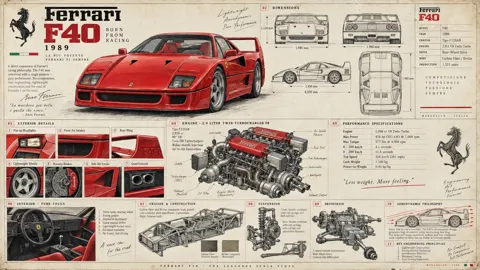 Explore prompt ↗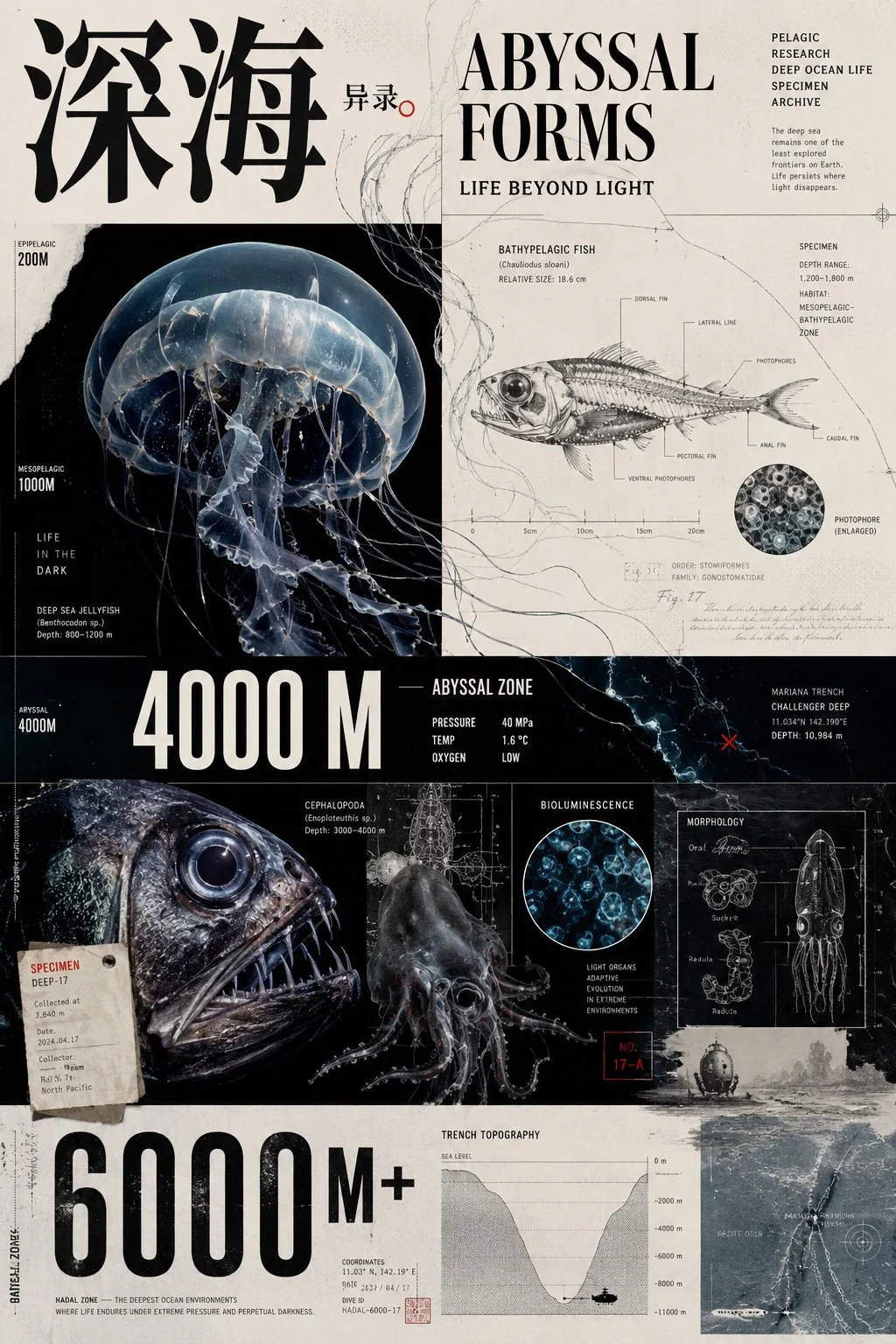
ChatGPT
DesignChatGPT
Natural science editorial poster design
Creator @MrLarus
Prompt
[Theme]: Deep sea / Insects / Minerals / Plants / Other natural science themes
[Main Title]:
[English Title]:
[Core Research Object]:
[Structural Skeleton]: Depth / Wing veins / Faults / Root systems / Other natural structures
[Scientific Materials]: Specimen photography / Anatomical diagrams / Micrographs / Data / Charts / Maps
[Main Color + Accent Color]:
[Ratio]: 9:16

Design a high-density natural science Editorial Poster, merging Scientific Archive, Natural History Museum Visual, and Experimental Graphic Design, emphasizing controlled chaos / messy beauty.

Let the research object's own structure directly participate in the typography, for example: jellyfish tentacles connecting information, wing veins forming grids, mineral faults cutting the layout, root systems and leaf veins forming growth paths.

Mix real photography, scientific line drawings, microscopic images, specimen labels, data charts, and giant Typography, and design multiple visual blocks of different natures. Connect blocks through cropping, occlusion, cross-boundary, dislocation, and overlapping; do not make them independent and neat modules.

Establish obvious scale contrasts: super large titles / numbers + medium-sized scientific information + extremely small metadata. Control the visual rhythm of "Loose -> Dense -> Strong -> White Space," making local areas high-density and local areas suddenly empty.

Keep colors restrained, mainly 2–3 base colors + 1 small amount of accent color, adding real textures such as paper, scans, specimen archives, and printing grain.

Final effect: scientific editorial design, specimen archive, macro-to-micro imagery, experimental typography, asymmetric collage, layered composition, museum-grade graphic design, controlled chaos.

Avoid: ordinary popular science infographics, neat grids, materials spread evenly, children's encyclopedia feel, main image + title templates, same texture for all blocks, only "messiness" without a visual skeleton.
Copy the text, add your own details, and try it in your image model.