Piko
Piko Explore prompt ↗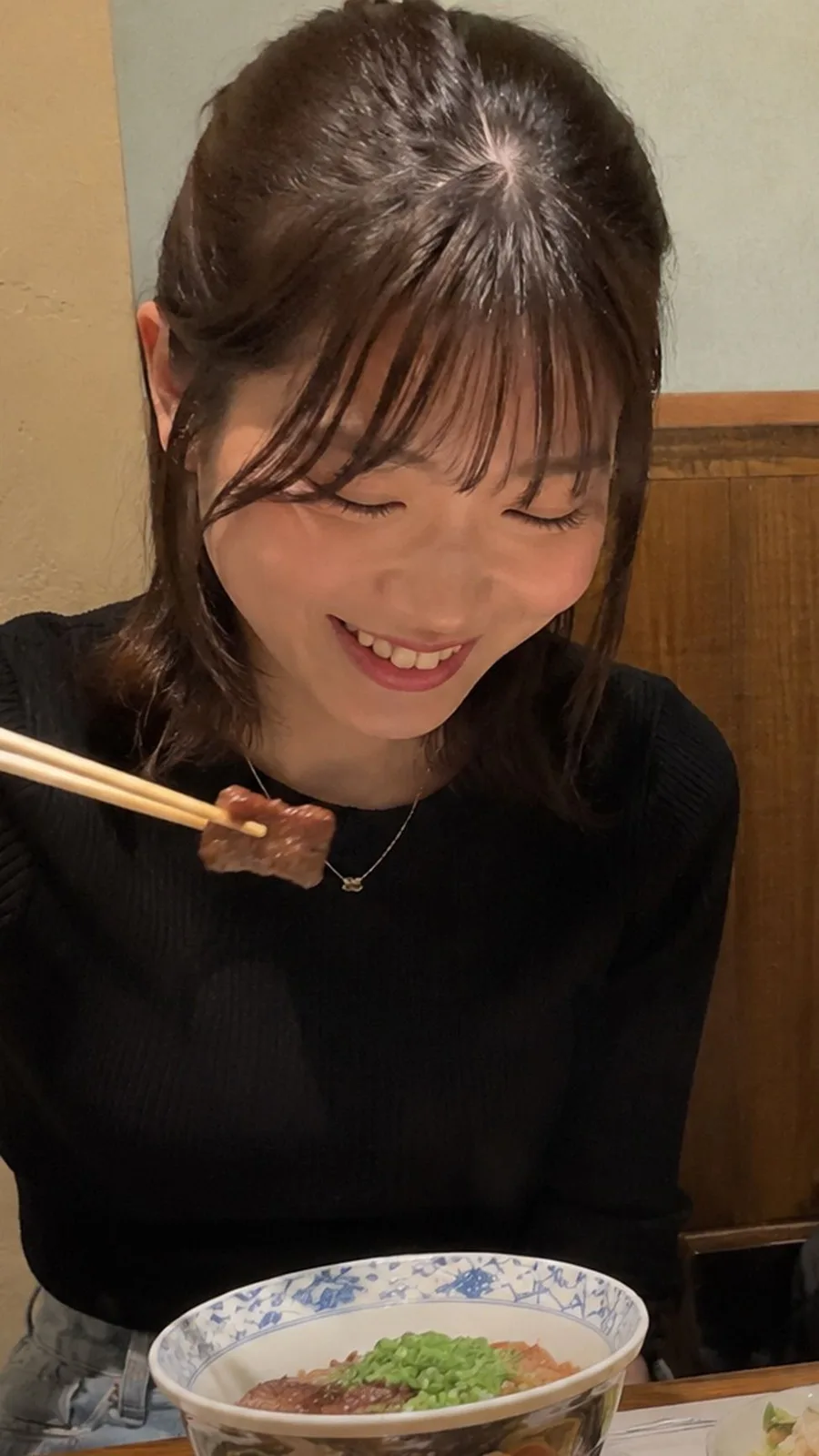
ChatGPT
PortraitChatGPT
Japanese restaurant yakiniku bowl woman portrait
Creator @AiPhotoDesigner
Prompt
Subject:
The final image is fixed as a single 9:16 vertical photo. The center of the face is placed at horizontal 51%, vertical 30%, closed eyes at vertical 25%, the meat at the tip of the chopsticks at horizontal 32%, vertical 49%, and the center of the rice bowl near horizontal 51%, vertical 78%. The bounding area of the person is horizontal 11–92%, vertical 2–81%, with about 2% white space at the top of the head, and the rice bowl cut off at the bottom. These ratios, the bounding area, the positions of the face/eyes/hands/small items, and the top/left/right/bottom margins are fixed as anchors; do not re-center or adjust, and do not equalize background margins during each generation. Parts extending outside the frame remain cut off and are not completed through canvas expansion. Do not change the same woman, same face shape, same hairstyle, same clothing, same pose and contact, same background layout, same lighting, color, material, and surface treatment. Do not perform horizontal flip, vertical flip, change of angle of view, change of camera distance, zooming in only on the face, or shrinking only the person. Fix the overlapping order of the person and the background, the position where the outline reaches the edge of the screen, and the size relationship between the foreground and background of the hand. The tolerance for each anchor point observed in normalized coordinates is strictly controlled within ±2% in principle, and correction that shifts the hand or small items only to align the center of the face is prohibited. During final confirmation, use both overall display and enlarged display to check if the same information is located in the same position as the original image.

The protagonist is a single, cute and natural fictional adult Japanese woman sitting in a seat at a quiet Japanese-style restaurant, about to bring a piece of grilled meat picked up with chopsticks to her mouth. Included in the frame from the top of the head to the upper edge of the rice bowl, wearing a black long-sleeved ribbed top. The number of people is fixed at one, represented as a fictional adult over 20 years old, not a real person. Only reproduce the age impression, body type, visible parts, clothing, and movements visible in the frame; do not assign attributes that cannot be visually determined such as nationality, occupation, or family relationships. Do not replace the person with another face shape, another body type, or another age group, even if other people are visible in the background, do not promote them to the protagonist. Maintain a natural boundary between the protagonist's silhouette and the background.

Face/Makeup:
The face and elements within the face in the frame are a small oval shape, thin bangs partially covering the eyebrows, closed eyes, a natural bridge of the nose, and a large smile with teeth slightly visible. Raise the cheeks to convey the pleasure just before eating, but do not unnaturally open the mouth wide. The base makeup is not thickly applied, preserving small fluctuations in skin tone, the three-dimensionality of the cheeks, nose, and mouth area, and natural pores. The left and right eyes, eyebrows, nostrils, corners of the mouth, and visible teeth are naturally aligned as a human body; do not unify the irises or catchlights as if they were copied. Makeup is limited to light colors identifiable in the image; do not add heavy eye shadow, thick eyeliner, artificial fake eyelashes, strong contouring, excessive whitening, or plastic-like skin.

Hair:
The hair is dark brown semi-long hair, close to black, tied back, preserving thin bangs and long bangs on the sides of the cheeks. Natural parting on the top of the head and small highlights from indoor light. Do not unify every strand of hair into lines; mix thick bundles, medium bundles, and thin bangs, with continuous flow from root to tip. Do not break the overlap of the hairline, parting, ear area, neck, or shoulders. Only reflect wind, moisture, gravity, and contact visible in the frame; do not change to other hairstyles, excessive curls, or a helmet-like appearance with uniform gloss.

Expression/Gaze:
The expression and gaze consist of closed eyes, the face slightly downward, and a wide open smile. The gaze is not visible, naturally conveying joy in anticipation of the dish. Do not show food already in the mouth, exaggerated chewing, or the tongue exposed. Keep the direction of the left and right pupils and the focal distance consistent to avoid squinting, different focal points for each eye, or unnatural showing of the whites of the eyes. Link the movement of the cheeks, outer corners of the eyes, nostrils, and corners of the mouth to the same emotion; do not use a sticker-like smile only on the mouth. There are no tears, intense surprise, anger, sleepiness, provocation, or romantic assertions in the image; do not add such elements.

Pose/Fingers/Contact:
The pose, fingers, and contact involve the upper body leaning slightly forward toward the table. A single hand entering from the left side of the frame holds wooden chopsticks, with the tips holding a small piece of meat near the horizontal. The opposite hand is outside the frame. Ensure correct contact and gravity for the chopsticks, fingers, and meat. The parts of the shoulders, collarbones, neck, upper arms, elbows, forearms, and wrists connected within the frame are presented at natural skeletal angles. When the hand is visible, do not confuse left and right; one hand has five fingers, and the number of joints, nail direction, and finger length are natural, with the object holding contact points consistent with pressure and gravity. Do not have invisible fingers or body parts grow out of the background, and avoid arm fusion, shoulder doubling, neck lengthening, or joint hyperextension. Fix the twist and transformation of the body direction and face direction within the range of the original image.

Clothing/Accessories:
Clothing and accessories consist of a solid black long-sleeved ribbed knit. A crew neck, fine vertical ribs fitting the body, and natural folds at the shoulders and sleeves. A thin silver chain with a small round pendant. No other decorations or logos. Do not change the color, neckline, cuffs, shoulder straps, knots, stitching, hardware, or the presence of decorations. The fabric is not attached like paint; small wrinkles are generated according to stretch, drape, thickness, gravity, and contact. Visible small items maintain the same shape, position, holding method, and material; do not add brand text or fictional logos. Do not infer and complete the overall clothing or unconfirmed accessories outside the frame.

Place/Time/Background:
The place and background are a warm-lit Japanese-style restaurant. The background consists of a light beige painted wall and waist-high wooden panels, with a black chair or partition in the lower right corner. The foreground is a large blue and white bowl with a white base, topped with green chopped onions and meat dishes. The time period is fixed to the brightness readable from the light in the frame; do not replace it with other times or places like night scenes, sunsets, or studio backgrounds. Safeguard the order and overlap of the foreground, middle ground, and background, and naturalize the orientation of visible structures such as the horizon, walls, windows, floors, furniture, and plants. The entire tabletop, the opposite hand, below the waist, everything inside the rice bowl, and other guests in the store are all outside the frame. Do not create unknown dish names, store names, menus, extra tableware, steam, or logos. The background is not simplified to a blank space, nor is it filled with information not present in the original image.

Composition/Camera:
The composition and camera are a vertical snapshot from a position slightly higher than the dining companion's line of sight. 35-50mm equivalent, with the face, chopstick tips, and rice bowl in a triangular arrangement. Focus on the face and the meat; the rice bowl is sufficiently readable but the distant wall is softly blurred. Fix the vertical cropping, shooting distance, camera height, pitch angle, and the direct/oblique orientation to the subject. Maintain the natural resolution of a smartphone, avoiding wide-angle barrel distortion, face center swelling, or elongation of only legs or arms. The focal plane matches the protagonist's face or the image theme, and the background blur amount and outline correspond to the original image. Do not create unnatural uniform blurring like an outline cutout, double outlines, or generated blur vortices.

Light Source:
The light source is mainly warm diffused lighting from the ceiling, with soft amber light on the front of the face and hair. A weak fill light from the front left of the frame shines on the chopsticks, meat, and fingers to make them readable, without blackening or flattening shadows. Keep the main light source, auxiliary reflections, and shadow directions consistent, applying the same lighting conditions to the face, hair, clothing, small items, and background. Catchlights or material reflections correspond to the light source position; do not add multiple contradictory suns, irrelevant spotlights, or artificial luminescence around the entire outline. Highlights retain fine gradations, and do not simultaneously blow out skin, white cloth, sky, clouds, or windows. Shadows also retain color information and reflected light.

Color/Tone:
The colors and tones integrate the black clothing, dark brown hair, beige wall, wood color, white/blue bowl, green onions, and reddish-brown meat into a warm color system. Suppress indoor yellow cast; skin maintains natural warm tones. The white balance matches the scene light, suppressing mutual contamination of skin, white, black, and background colors. Smoothly connect from highlights to midtones to shadows, avoiding HDR-style local contrast, fluorescent colors, excessive blue-orange separation, crushed blacks, or halos around outlines. Saturation maintains the relationship between main and accent colors within the image; do not change the hue of clothing or background colors to others.

Texture/Fine Detail:
The textures and fine details depict the weave of the black knit, hair bundles, the smooth surface of the wooden chopsticks, the surface of the grilled meat, chopped onions, the glaze and blue-and-white patterns of the ceramic bowl, the wooden wall, and the natural texture of skin pores and teeth. Skin is not a uniform noise surface; pore size, fine vellus hair, blood color, differences in dryness and moisture, and differences in gloss are naturalized according to the part. Hair, cloth, wood, ceramics, sand, water, metal, plastic, etc., are not given a uniform gloss; surface roughness, transparency, reflection range, and edge thickness are depicted individually. High definition does not create pseudo-text, regular repeating patterns, over-sharpening, or grid-like noise. When enlarged, not only outlines but also tiny shadows at contact surfaces, semi-transparent edges, surface irregularities, and fiber or grain directions can be confirmed for density. On the other hand, do not exaggerate invisible pores or fibers into a coarse texture, safeguarding the amount of information appropriate for the shooting distance.

Image Processing/Finish:
The image processing is completed as a realistic smartphone photo or a natural portrait photo. Exposure, color temperature, contrast, clarity, saturation, and noise reduction are moderate, maintaining the brightness and atmosphere of the original image. Do not smooth the skin separately as if it were another layer, and avoid over-emphasizing only the pupils, teeth, or lips. Retain slight sensor grain and natural gradations, not leaning toward illustrations, 3DCG, wax figures, or over-composited photos for advertising. During local outline correction, do not dissolve fine hair lines, eyelashes, fingertips, clothing edges, or accessory edges into the background, and conversely, do not create white borders. After noise reduction, do not unify the graininess of skin, cloth, hair, and background; each retains its depth and material difference. The tone curve does not excessively compress highlights, with the face and clothing in the midtones as the protagonists, without over-boosting shadow information to the point of flattening. Do not add chromatic aberration, excessive vignetting, artificial light leaks, or lens flare. The final output does not insert text, subtitles, borders, watermarks, signatures, UI, or mockups; only output a single 9:16 photo.

Corruption Avoidance/Prohibitions:
The highest priority condition for corruption avoidance: prohibit resemblance to real people, de-aging, replacement with others, multi-person conversion, asymmetrical face collapse, inconsistent pupil shapes, fused teeth, overlapping nostrils, deformed ears, and poor neck-shoulder connections. When hands are present, prohibit extra fingers, missing fingers, fused fingers, flipped palms, abnormally long nails, or fingers penetrating objects. Clothing prohibits disappearing shoulder straps or sleeves, fusion with the body, interrupted patterns, or added transparency. Background prohibits curved horizons or wall lines, dissolving furniture or utensils, giant background figures, or text that looks readable but is not. Regarding invisible elements, the entire tabletop, opposite hand, below the waist, everything inside the bowl, and other guests in the store are all outside the frame. Do not create unknown dish names, store names, menus, extra tableware, steam, or logos; safeguard this boundary and do not generate content outside the frame or unknown content. Do not add beauty filters, excessive face-slimming, enlarged eyeballs, extreme chest/waist emphasis, explicit sexual hints, low angles that only incite body parts, other clothing, other backgrounds, other light sources, other seasons, logos, brands, or watermarks.
Copy the text, add your own details, and try it in your image model.