Piko
Piko Explore prompt ↗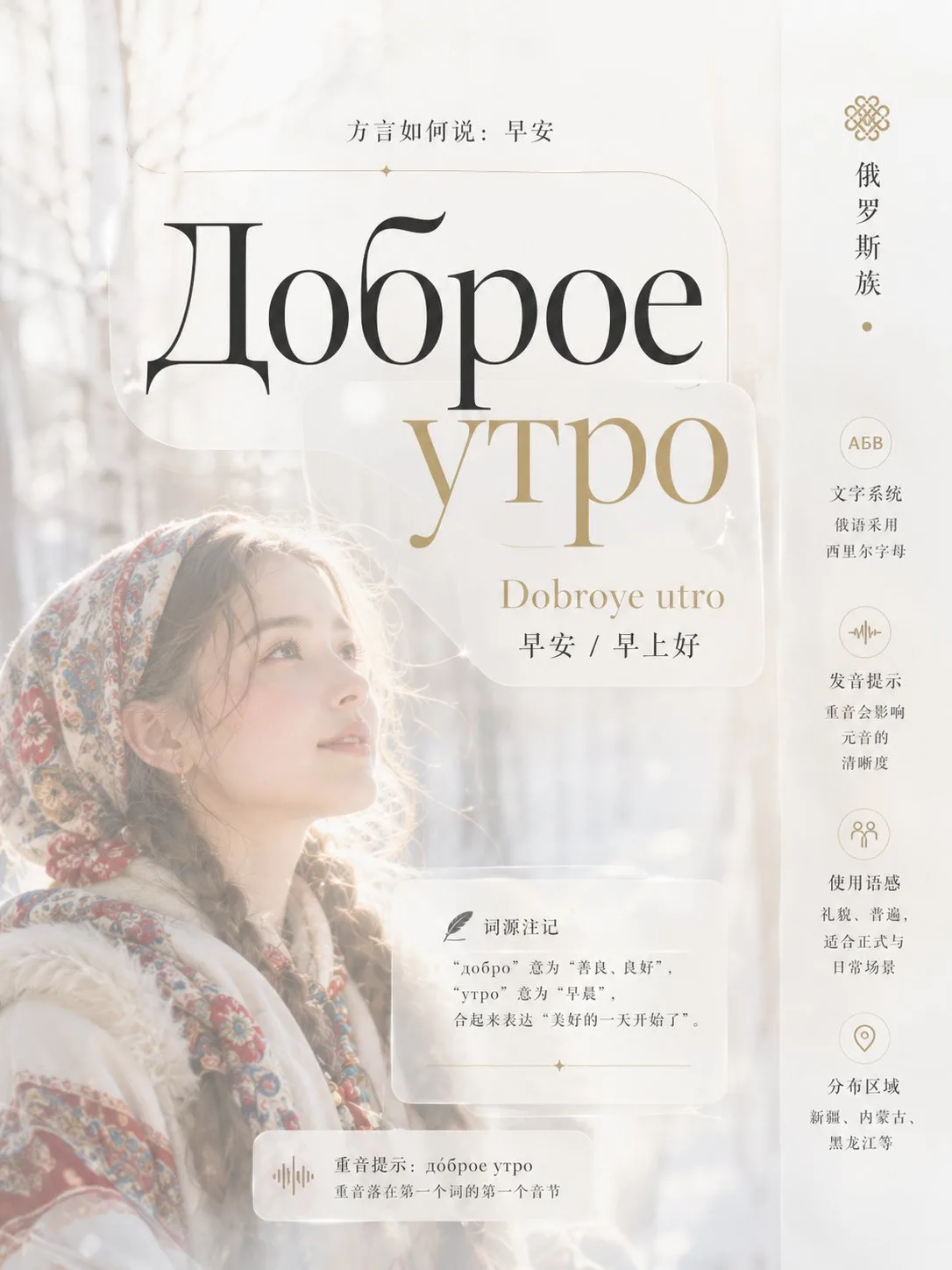
ChatGPT
PhotographyChatGPT
Ethnic minorities good morning dialects visual system
Creator @xiaoxiaodong01
Prompt
Construct a light and translucent PPT visual system narrated by giant text and soft-focus imagery: with editorial rhythm as the main axis, using scale transitions of titles, focal imagery, descriptions, and data to form 'impact—pause—close reading'; with dynamic balance letting the top-left text center of gravity, biased visual subjects, and peripheral information bands counterbalance across space; using Gestalt principles of continuity and proximity, connecting scattered information with thin line tracks and grouping related content; using the Munsell value-chroma system to maintain projection readability of high-value backgrounds and local deep-value anchor points. Drawing from Alexey Brodovitch to establish editorial breathing with radical font sizes, cropping, and large white space; Muriel Cooper for thin spatial construction with translucent layers, light-color penetration, and front-middle-back ground; Herb Lubalin’s ligatures, shared strokes, and long-tail extensions for display characters only, making text directional graphics; Emil Ruder for body text rhythm, baseline order, and multi-level clarity, with the four collaborating in distinct domains without replicating individual works. Color schemes adopt a replaceable five-role syntax: background field accounts for 55%—65%, highest value, low chroma, and allowing slow warm-cold drift; focal visuals account for 20%—25%, medium-high value and medium chroma; informational text accounts for 10%—15%, establishing main contrast with deepest values; translucent support layers account for 5%—10%, low chroma and adjacent to the background to produce soft simultaneous contrast; high chroma highlights no more than 3%, falling only on key nodes. Future themes or brand color schemes must be mapped one-by-one by role, retaining area ratios, value order, chroma gradients, temperature relationships, and adjacent contrasts, without needing to change layout or fonts. Layout employs multi-column editorial grids and baseline grids: the first reading point is a column-crossing giant title, the second is a boundary-crossing focal visual, the third is data and descriptions; wide negative space is reserved around the edges, slender sidebars carry secondary information, breaking order with one column-cross or boundary-cross, controlling information density per page and ensuring thumbnail legibility. Backgrounds are composed of high-key photographic synthesis, first laying a vertically softened translucent base, then layering low-contrast environmental imagery and local out-of-focus foreground occlusion, finally adding a small amount of free-form halos; using diffused ambient light, low-density atomization, soft color spills without hard edges, and slight fabric-like vertical textures, with focal layer edges going from blurred to sharp, avoiding uniform full-page blurring. Typography uses a contrast pairing of high-stroke-contrast display serifs and a restrained body text system; display characters are oversized, compact, and allow for ligatures with shared strokes and terminal strokes extending in the reading direction, creating occlusion or guiding relationships with image contours; Chinese characters echo the vertical tension of Latin characters with sharp terminal strokes and balanced center-mass, while body text is graded by weight, width, spacing, and optical grayscale, with Chinese, English, and numbers aligned by visual weight rather than nominal font size. Clear, poetic, breathable, soft, agile, bright. Theme: 10 Ethnic Minorities, how to say Good Morning in dialects. A total of 10 images, each being a name theme. Different layouts. Each image should have 3-5 knowledge points, different information presentation methods. Professional collection-level typography and fonts. Aspect ratio 3:4. No serial number logic.
Copy the text, add your own details, and try it in your image model.