Piko
Piko Explore prompt ↗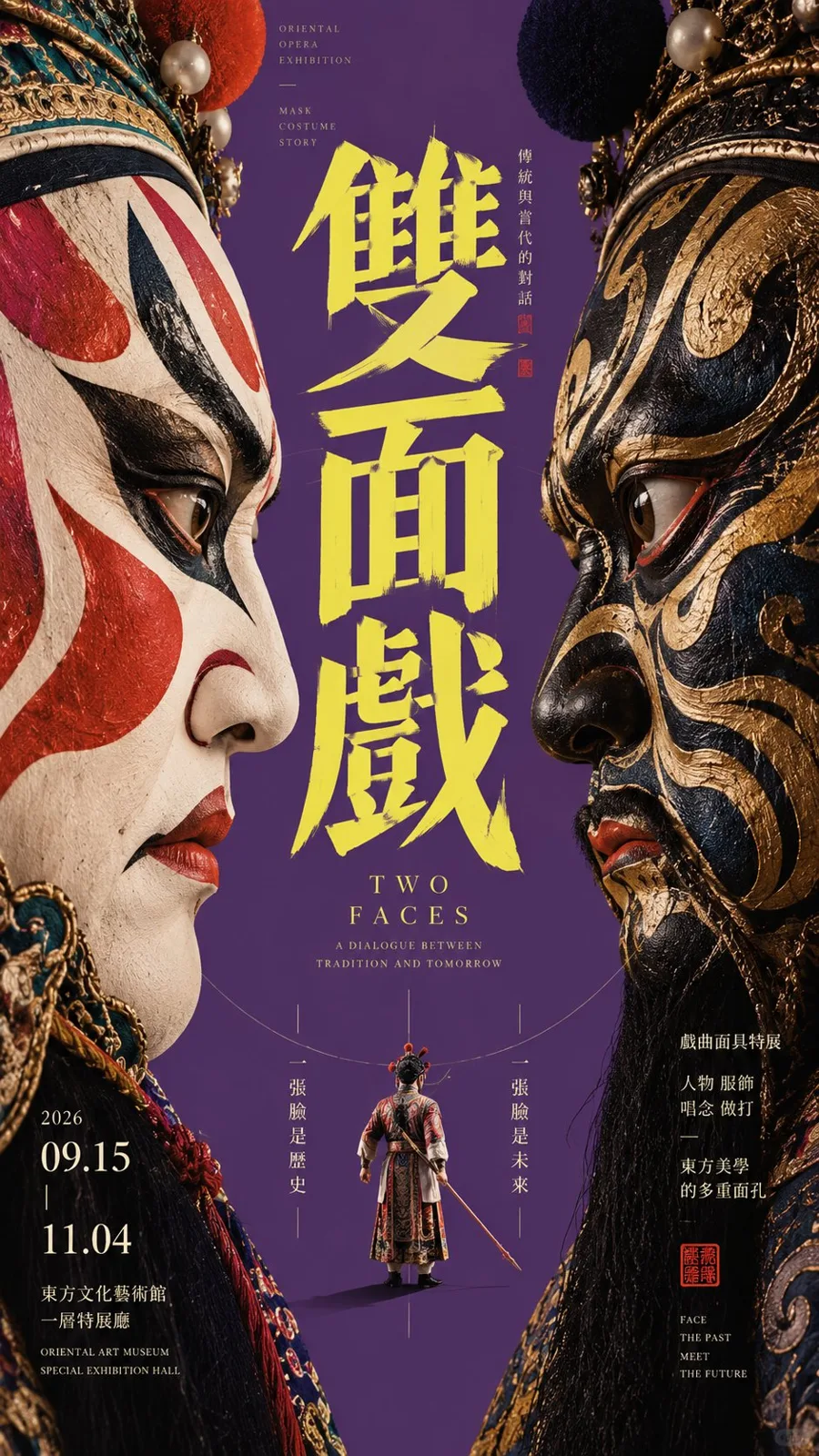
ChatGPT
DesignChatGPT
Central axis squeezed view cultural exhibition poster prompt
Creator @MrLarus
Prompt
[Subject]: ____
[Chinese Main Title]: ____
[English Title]: ____
[Left Subject]: ____
[Right Subject]: ____
[Composition Method]: Double-sided Squeezed View / Mirroring Contrast / Four-corner Array / Dual-object Juxtaposition
[Main Background Color]: ____
[Title Color]: ____
[Subject Material / Style]: ____
[Date / Venue]: ____
[Aspect Ratio]: 9:16

Generate a "Central Axis Squeezed View" poster with strong visual impact and a high-end cultural exhibition temperament.

First establish a clear and stable vertical central axis, then let the left and right subjects jointly apply visual weight toward the center, "squeezing" the main title and core information into the visual focus of the frame.

The left and right subjects must be large enough to occupy the main visual weight and be close to the edges of the frame to create a sense of cropping. The two sides can differ in form, size, material, and details, but the overall visual weight must be balanced, avoiding mechanical mirroring or simple duplication.

Choose a composition method based on the content:

Double-sided Squeezed View: Two large subjects move from the left and right toward the center, with a huge title placed on the central axis.
Mirroring Contrast: Two faces, masks, or profiles of characters face each other, creating intense dialogue and tension in the middle.
Four-corner Array: 4 subjects of the same type but different shapes are arranged around a central longitudinal title, forming a stable collection array.
Dual-object Juxtaposition: Two artifacts are placed side by side, with the central axis establishing order through the title, date, and decorative patterns.

The Chinese main title must become an important visual element, which can use oversized vertical alignment, mixed horizontal and vertical layout, partial cropping, or slight overlapping with the subject, rather than just being plainly placed at the top.

Small English, dates, locations, and exhibition descriptions should be concentrated within 2–3 information zones, creating a distinct font size contrast through the oversized title and tiny text. Information density can be rich, but it must be concentrated and hierarchical, not evenly spread across the layout.

Use a large area of solid color background to establish strong recognition, such as vermilion, cobalt blue, lemon yellow, purple, dark brown, or grass green. Control the overall palette to 3–4 main colors, creating contrast through subject materials, typography, and a small amount of accent colors.

Visual style reference: Museum Exhibition Poster × Contemporary Editorial Graphic Design: historical artifacts, figures, cultural relics, or traditional cultural subjects combined with bold, modern, and clear typography.

Overall requirements: strong central axis, strong subject, strong color gamut, stable but not stiff composition; rich in detail but not cluttered; obvious collision between classical content and modern design language.
Copy the text, add your own details, and try it in your image model.